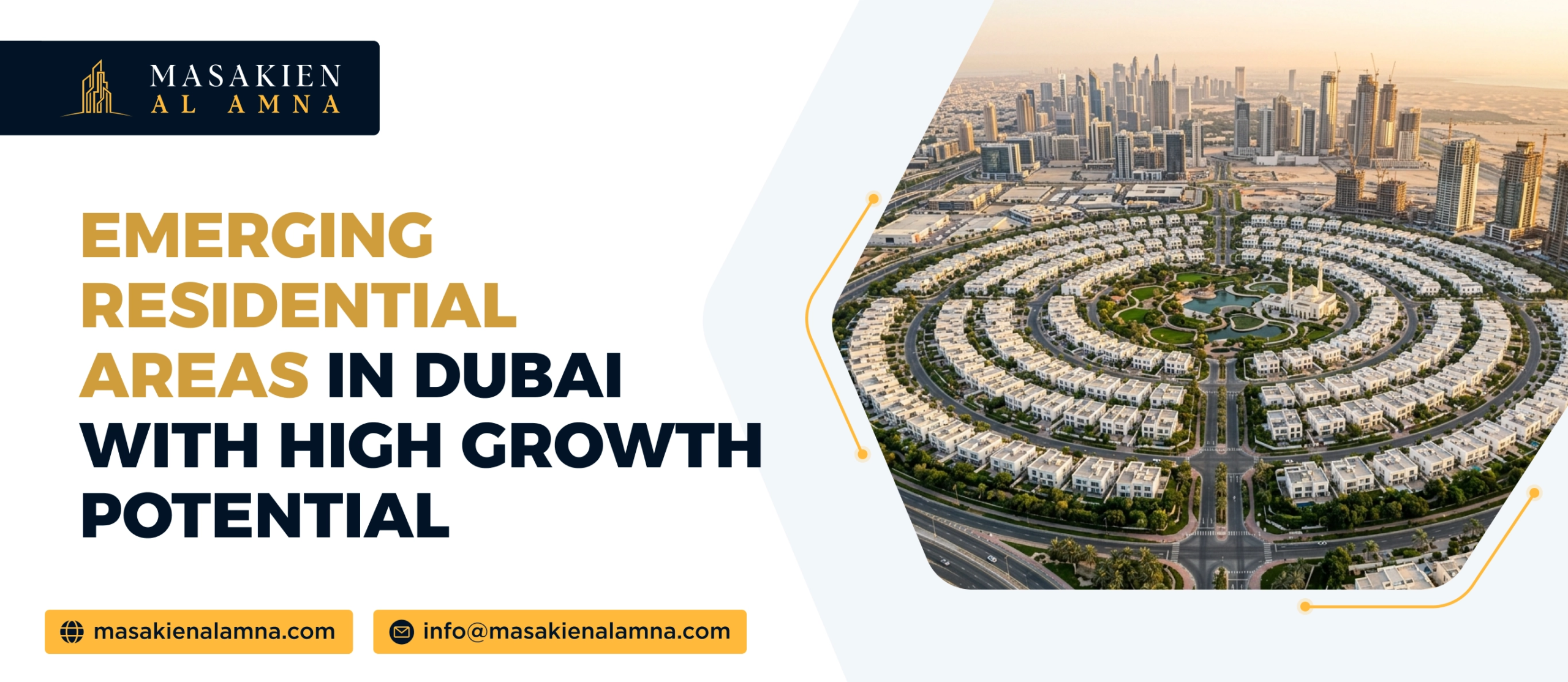
Dubai’s real estate market keeps drawing global investors, working professionals, and families who want modern living and long-term returns. Even though well-known spots like Downtown Dubai and Dubai Marina are still popular, more buyers now seem to pivot toward new residential communities that feel a bit more affordable, with infrastructure moving ahead and better prospects for future appreciation. Rapid population growth, metro expansions, airport-related changes, and large mixed-use master developments are basically putting fresh locations into the conversation.
For investors and end users, spotting these emerging neighborhoods early can mean steadier rental yields, a lower buy-in price, and stronger capital growth later on. In 2026, several Dubai communities are gaining visibility, mainly because of government-supported plans, improved connectivity, and rising demand for homes.
Dubai South – Dubai’s future growth corridor
Dubai South has become one of the strongest emerging residential areas in Dubai because it sits in a strategic spot near Al Maktoum International Airport and Expo City Dubai. The government’s big infrastructure spending around the region is expected to, in the next decade, turn it into a major kind of business, logistics, and residential hub. Investors are especially attracted by its affordable property pricing and the long-term appreciation angle.
Also, the area provides modern apartments, villas, and townhouses, made for families as well as professionals. With road connectivity getting better, plus the planned metro access and the commercial growth that is steadily showing up, the housing demand is rising. A lot of analysts say Dubai South is still in an early stage of growth, so it looks interesting for buyers who want future returns, even if it takes time.
Jumeirah Village Circle (JVC) – High Rental Demand and Affordable Investment
Jumeirah Village Circle, or just JVC, keeps expanding as one of Dubai’s more attractive mid-range residential communities. Here you can find apartments and townhouses at a level that feels affordable compared to premium neighborhoods, yet it still provides solid access to major business areas. This mix is why JVC stays popular with young professionals, families, and those long-term tenants who prefer stability.
One of the clearest benefits of JVC is its strong rental demand plus a steady ROI track record. New off-plan projects, retail openings, schools, and community parks are adding to the overall “day-to-day” appeal. Investors are leaning toward JVC too, since it offers lower entry costs with reliable rental income options, and that combination is kind of hard to ignore. Check out our latest blog post on Dubai Property Market Trends to Watch in 2026.
Dubailand – A Large-Scale Family Residential Hub
Dubailand has evolved into one of Dubai’s largest residential expansion zones, and honestly, it feels like it’s pulling in buyers. Mainly because the housing is more spacious, the vibe is family-oriented, and the pricing is comparatively more manageable. And since Dubai’s population keeps climbing, Dubailand is starting to look like a go-to option for residents who want larger homes without being trapped right in the busiest city core.
At the same time, the location is seeing ongoing infrastructure upgrades—schools, healthcare centers, entertainment areas, and retail developments, you know, the full sweep. Inside Dubailand, pockets like DLRC and Liwan are getting more attention as investment hotspots because they’re accessible and the rental demand stays fairly steady. When you combine affordability with infrastructure momentum, it should help nudge property prices upward over the next few years, gradually and consistently.
Dubai Creek Harbour – Waterfront Living With Long-Term Potential
Dubai Creek Harbor is quickly becoming a premium waterfront destination where luxury living and long-term opportunity kind of merge together. It’s placed close to Downtown Dubai and Dubai International Airport, so it feels convenient, and yet you still get those bold water views and modern urban planning. A lot of investors basically see it as a future counterpart—sometimes even a rival—to Downtown Dubai.
Large residential and commercial projects are also boosting demand here. The community was designed with sustainability in mind, plus walkability and smart infrastructure, which makes it suit modern routines. Once the remaining retail, hospitality, and entertainment options are fully delivered, Dubai Creek Harbor should experience stronger increases in property values over time.
Meydan and MBR City – Luxury Growth Beyond Downtown
Meydan and Mohammed Bin Rashid City (MBR City) are, honestly, becoming major luxury residential zones in Dubai. They’re pretty close to Downtown Dubai and Business Bay, and because of that, these neighborhoods are pulling in high-net-worth individuals plus investors who want premium property, but also with future growth potential.
Right now, the areas are seeing big mixed-use developments; think luxury villas, branded residences, retail spaces, and kinds of lifestyle destinations, too. On top of that, improved road networks and upcoming infrastructure projects should make access easier, or at least more smooth. Since these communities are still expanding, many investors keep saying that property prices could rise quite a lot in the next few years, maybe even faster than expected.
Dubai Islands – The Next Waterfront Investment Destination
Dubai Islands is starting to look like one of the city’s most ambitious waterfront developments. The concept is aimed at luxury coastal living, but also hospitality and leisure experiences. Investors seem interested pretty quickly here because waterfront communities in Dubai, in general, have tended to perform well, especially regarding capital appreciation and tourism demand.
The area is expected to gain from upgraded infrastructure, luxury hotel developments, and, of course, the rising demand for premium waterfront properties. And since Dubai is still positioning itself as a global tourism and investment hub, coastal communities like the Dubai Islands may become very desirable residential destinations later on.
Factors Driving Growth in Emerging Dubai Communities
Several factors are helping explain the rapid rise of these emerging residential areas. Big infrastructure works, metro expansions, airport developments, and population growth are basically boosting the demand for housing across Dubai. Then there are government policies, supporting foreign ownership and long-term residency visas, which are also pulling in international investors, steadily and gradually.
Also, buyers are lately paying more attention to neighborhoods that feel more affordable, with modern conveniences, greener pockets, and a healthier work-life balance. Many emerging areas deliver these advantages at lower entry prices than older, more established districts. That makes them quite appealing for both investors and people who want to live there, not just buy and wait.
Challenges Investors Should Consider
Even so, emerging communities can look promising; investors still really should check risks before committing. Some locations can face delays in infrastructure delivery or weird swings in supply and demand. A few experts have also flagged the possibility of future oversupply in specific segments of Dubai’s property market.
Buyers should therefore research the developer’s reputation, verify project milestones, study rental demand patterns, and review long-term infrastructure plans. And yes, the right micro-location inside an emerging district can end up meaning everything for future returns and the occupancy level later on.
Conclusion
Dubai’s real estate market keeps moving, so it keeps creating fresh opportunities in emerging residential communities. Places like Dubai South, JVC, Dubailand, Dubai Creek Harbour, Meydan, and Dubai Islands are drawing strong investor focus. Contact us as mostly because of infrastructure expansion, affordability, and the chance of long-term appreciation. These areas are shaping what Dubai’s residential scene will look like, and they are opening up new paths for buyers seeking higher returns, though sometimes it depends on timing and due diligence.