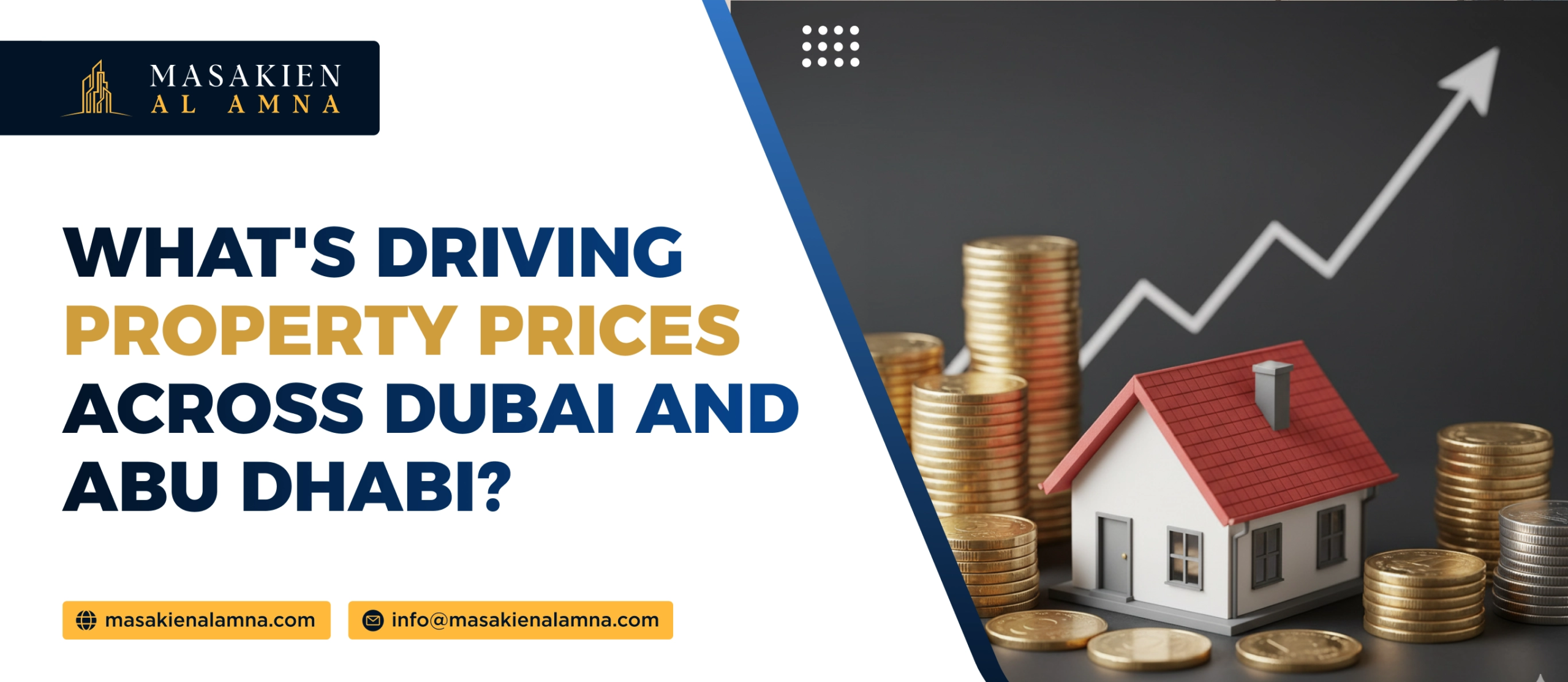
Dubai and Abu Dhabi have basically become two of the most interesting real estate arenas in the world. Investors, homebuyers, and even businesses keep leaning in when it comes to properties in both cities, mostly because of economic stability, top-tier infrastructure, and that investor-friendly tone from the market. Over the past few years, property prices have been climbing in a fairly steady way, so the UAE has become a go-to place for real estate investment.
And still, the bigger question remains: what is pushing these costs higher? The answer isn’t one thing, though; multiple elements are working together, things like economic expansion, population growth, overseas capital, and certain government programs. If you map out those drivers, investors can make sharper choices and spot likely openings later on in the UAE real estate scene.
Strong Economic Momentum
A major reason behind rising property prices in both Dubai and Abu Dhabi is the UAE economy itself; it’s got real strength behind it. The country has managed to diversify a lot beyond oil, and it has poured resources into tourism, technology, logistics, healthcare, and financial services. These sectors keep pulling in international companies plus skilled professionals, and that creates a solid base for ongoing economic progress. When corporate activity grows, people usually follow, and the demand for homes and offices tends to rise right along with it.
Economic momentum also lifts consumer confidence and supports long-term commitments. When companies expand and jobs show up, more people move into the UAE for work, life changes, and career progression. That naturally increases the appetite for housing, office spaces, and retail areas. So, developers and landlords are able to set higher asking prices over time, and the whole cycle keeps repeating, a bit like a chain reaction.
Population growth and, honestly, a big influx of expats
Dubai and Abu Dhabi keep pulling in thousands of expatriates each year, largely because of the strong job markets and what people describe as a high quality of life. Folks from all over the world arrive in the UAE chasing better career paths, tax-free income, and access to modern infrastructure. At the same time, entrepreneurs and owners are also using the UAE as a sort of operational base for wider regional plans. All of this continuous population expansion ends up boosting the need for housing in a very direct way.
Once more, people settle in, and the demand for apartments, villas, and rental properties continues to climb. Many well-known residential communities end up with higher occupancy rates, plus increased buyer attention. Families tend to search for larger homes, while younger professionals often want smaller places but in convenient locations. That shift in demand gently but steadily pushes property prices upward, especially in the more developed and highly desired neighborhoods.
Investor-friendly government policies
The UAE government has rolled out initiatives that, in practice, have increased confidence in the property sector. Examples like the Golden Visa give investors, entrepreneurs, and skilled professionals the possibility of long-term residency. Because of this, some individuals don’t treat the UAE like just a stop on the map; they’re more likely to invest in property instead. The outcome is a clear increase in demand for both homes to live in and properties for investment.
In addition, the government has improved property regulations to create a more transparent and secure investment atmosphere. Strong legal protections, clear ownership rights, and efficient deal processes make real estate investment feel a bit more attractive. These reforms have helped build more trust among both local and international buyers, even if the headline story looks basically the same. As investor confidence keeps growing, property demand and prices continue to rise, step by step. Check out our latest blog post on The UAE Property Hotspots Investors Are Watching in 2026.
Limited supply of addresses
Prime locations in Dubai and Abu Dhabi still stay highly in demand for investors and homebuyers. Areas like Downtown Dubai, Palm Jumeirah, Dubai Marina, Yas Island, and Saadiyat Island provide premium services, good connectivity, and a sort of prestigious address, too. Those places tend to attract buyers who want lifestyle perks but also long-term upside. Because of that, demand remains consistently high.
Even though new developments keep entering the market, the availability of premium properties in top locations stays limited. Waterfront properties and city center projects can’t really keep stretching forever, due to land constraints. This limited supply pushes competition among buyers and investors. When demand overshoots the available inventory, property prices usually climb, and that’s when strong capital appreciation tends to follow.
Growth in foreign investment
Foreign investment has become a key driver behind the growth of the UAE property market. Investors from Europe, Asia, North America, and the Middle East keep buying properties in Dubai and Abu Dhabi. They’re drawn in by the country’s stable economy, strategic location, and solid real estate performance. A lot of people see UAE property as a safer, more reliable long-term investment plan.
Compared to other major global cities, Dubai and Abu Dhabi often seem to bring relatively competitive property prices, plus decent rental yields that look attractive on paper. Investors can catch income from rent, and in the same breath, they may still see capital appreciation later on. Also, the lack of a few property-related taxes really makes returns feel stronger. That steady inflow of international money keeps property demand alive, and it helps prices keep moving up.
Expanding infrastructure and huge projects
Infrastructure development matters a lot when it comes to property value appreciation, and the UAE government keeps putting real focus into transportation systems, airports, highways, public services, and even smart city initiatives. Once communities become more reachable, it’s usually easier for residents and businesses to choose them, so the whole area tends to feel more desirable. And yes, better infrastructure often nudges demand for nearby homes.
On top of that, large-scale endeavors, like waterfront upgrades, cultural venues, business districts, and entertainment destinations, also drive momentum. The zones around these projects often attract interest from investors before anything is fully completed. Better connections, plus upgraded amenities, tend to build long-term value for property owners. So you get stronger chances for price appreciation and more real investment opportunities over time.
Rising demand for luxury real estate
Dubai and Abu Dhabi have essentially positioned themselves as top global choices for luxury real estate. High-net-worth individuals from everywhere keep turning toward premium villas, penthouses, and branded residences. The UAE combines that upscale lifestyle with safety, privacy, and world-class facilities. Because of this, wealthy buyers keep looking for exclusive properties, and the market stays relevant.
The luxury market also got a boost from the growing number of international entrepreneurs and business leaders who are relocating to the UAE. A lot of buyers seem to be looking for roomier houses, sea-facing views, and, basically, quick access to premium lifestyle facilities. And you know, competition for luxury properties in the most prestigious communities keeps getting tougher. So as demand keeps rising, property prices in the luxury segment keep pushing up to new levels, almost as if they don’t stop.
Strong Rental Market Performance
Strong Rental Market Performance is another key piece in this whole story, too. Dubai and Abu Dhabi offer rental yields that look attractive, especially when you compare them with many other global markets. Investors like the chance to collect steady rental returns while also benefiting from long-term value growth. That mix makes UAE real estate feel pretty compelling.
Also, the population keeps growing, and the number of expatriates continues to rise, which helps keep rental demand steady. In many of the better areas, apartments and villas often stay highly occupied throughout the year. When rental performance stays strong, it tends to encourage investors to buy even more and expand their portfolios. And this extra buying pressure feeds right into rising prices across the market overall.
Improved Lifestyle and Global Appeal
Then there’s the lifestyle part, because Dubai and Abu Dhabi give residents a quality of life that pulls people in from all over. The cities provide modern healthcare, international schools, solid infrastructure, high-end retail, and a wide range of entertainment. People can live in a safe and comfortable setting, where both personal life and professional development feel easier. Because of all that, the UAE becomes an obvious place to live and work.
The country’s spotty but stable steadiness and business-friendly environment keep making it even more appealing internationally, you know. Professionals, entrepreneurs, and families are increasingly seeing the UAE not just as a temporary spot but as a long-term place to build a life. And as more people end up settling in, the need for solid, well-made housing keeps rising. That steady pull, in turn, backs the idea of ongoing property price gains over time.
Future Outlook for Property Prices
Looking ahead, the property picture for Dubai and Abu Dhabi seems, honestly, very encouraging. With economic diversification continuing, plus ongoing infrastructure spending and population growth, demand should stay supported for years ahead. On top of that, government programs meant to draw in companies, investors, and skilled talent will keep market basics stronger. Because of this, the outlook for real estate investors is largely positive.
Even if some parts of the market see brief ups and downs, the best areas are likely to stay tough and resilient. Investor confidence doesn’t really wobble, partly because the UAE has a stable economy and a strategic global position. And since new developments and megaprojects keep reshaping both cities, interest in high-quality homes and spaces is expected to remain strong. So overall, there may still be good chances for long-term expansion and profitability.
Conclusion
Property prices across Dubai and Abu Dhabi are being pushed forward by a mix of economic momentum, population expansion, foreign capital, infrastructure development, and government policies that are supportive. Together, these elements have helped create one of the most energetic and sturdy real estate markets worldwide. Contact us as demand stays strong across residential, commercial, and luxury property types, which helps sustain long-term value increases.
As the UAE keeps strengthening its role as a global business, tourism, and investment hub, the outlook for the property market remains positive. Investors and homebuyers who get the real key drivers behind property prices can make more informed decisions and, in a way, increase their chances. There are strong fundamentals, plus ongoing development, so Dubai and Abu Dhabi are likely to remain leading real estate destinations for years to come.