The UAE real estate market has been widely seen as one of the most dynamic and, honestly, appealing property scenes on earth. Cities like Dubai and Abu Dhabi keep pulling in investors, companies, expatriates, and tourists from everywhere. The country’s strategic position, investor-friendly rules, and top-level infrastructure have made it a go-to choice for anyone thinking about property investment.
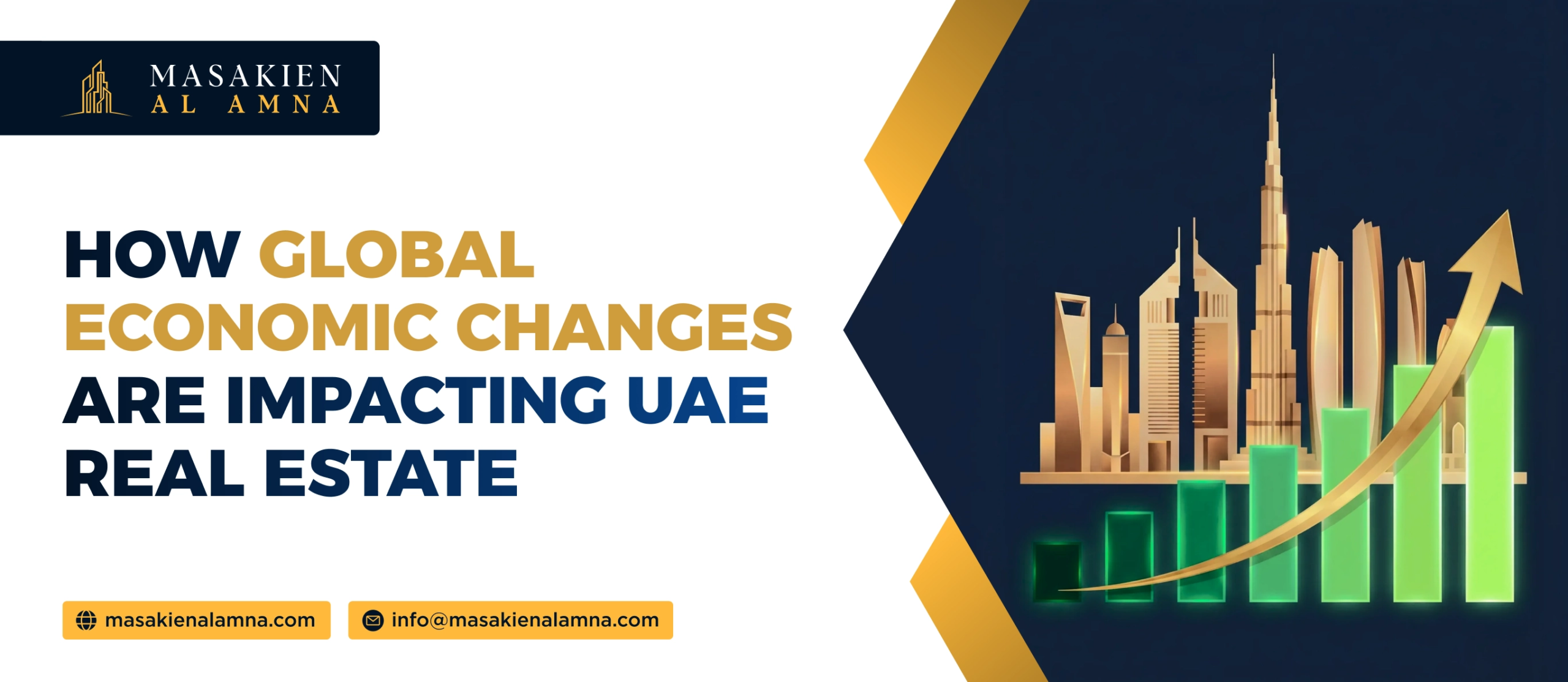
But the UAE market doesn’t really work in a bubble. Stuff happening globally—things like inflation, shifting interest rates, geopolitical stress, moves in energy pricing, and changing patterns in international investment—can directly steer real estate demand and the way prices behave. If you understand these pressures, investors, developers, and buyers can choose more wisely, especially in a space that seems to change a lot every few months.
The Connection Between Global Economics and UAE Real Estate
The UAE is strongly tied to the global economy via trade, tourism, finance, and investment channels. Because of this, economic events in bigger hubs such as the United States, Europe, China, and even other Gulf states can meaningfully affect what happens locally in property. When global economies start moving upward, investor confidence usually rises too, and that often means stronger property demand in the UAE.
On the other hand, when uncertainty grows in major markets, many investors look for safer, more tax-efficient options. The UAE usually wins attention here because it provides a stable operating climate, appealing residency pathways, and solid infrastructure. With all that, investor interest can stay steadier, even when global conditions feel wobbly.
Rising Interest Rates and Property Investment
One of the most important worldwide economic shifts that shows up in real estate is the uptick in interest rates. Central banks around the planet have been pushing rates up to put the brake on inflation, so borrowing becomes more expensive for households and companies. In the UAE, many banks end up tuning mortgage rates in line with wider financial movements, and higher borrowing costs can, in a practical sense, affect how affordable property is.
For homebuyers, a higher mortgage rate can raise the monthly repayment burden. When that happens, some people just delay purchasing decisions, and that may quietly cool demand in a few residential pockets. Still, the UAE has a notably strong cash buyer scene, so the negative ripple is often weaker compared with other countries where mortgages or credit take the lead in transactions.
On the investor side, those with a longer view generally keep buying even when rates are higher. They look at rental income, potential capital growth, and the broad upside for the UAE market. So, areas like premium and luxury properties tend to stay steadier, even during times when global financing costs are rising.
Inflation and Construction Costs
Global inflation has been hitting the prices of building inputs in a serious way—materials, transport, labor, and logistics. Developers everywhere have had to absorb extra expenses, and the UAE construction sector is not really exempt. Things like steel, cement, glass, and electrical components have seen price swings in recent years, sometimes fast, sometimes slow.
When construction costs climb, developers might revise pricing levels just to keep profitability stable. That can translate into higher sale prices for newly launched projects. Buyers may therefore notice that off-plan units come with increased prices, because developers factor in rising costs and also the uncertain part that comes later.
Despite these challenges, the UAE’s sturdy infrastructure and pretty efficient supply chains help ease some of the inflationary pressures, even if not completely. Developers are now leaning into inventive technologies and greener building routines to boost speed, manage expenses, and still keep the project quality at a decent level.
Global Investor Migration to the UAE
When economic uncertainty is high across a bunch of regions, investors tend to shuffle their portfolios internationally. The UAE, somehow, ends up being a top pick because of its political stability, business-friendly setup, and property ownership rules that look attractive on paper. So, foreign capital keeps playing a part in sustaining market momentum.
More high-net-worth individuals from Europe, Asia, Africa, and the Middle East are buying residential plus commercial units in the UAE. Many of them treat real estate like a sort of secure holding, something that can safeguard wealth when global finance feels jumpy.
Also, the arrival of long-term residency paths, like the Golden Visa initiatives, has noticeably reinforced investor confidence. These programs, in practice, nudge property ownership while giving investors and their families longer-term security and residency benefits, too.
Oil Prices and Economic Performance
Oil is still a major piece in the Gulf region’s economic puzzle, including the UAE. Even though the country has diversified into tourism, technology, logistics, and finance, the way the energy market performs still has ripple effects on overall economic activity.
If global oil prices stay strong, government income usually improves, and that can translate into more infrastructure projects, smoother business expansion, and broader economic growth. Those outcomes then tend to support real estate demand across residential, commercial, and industrial categories.
On the other hand, when oil prices take a real dip, it can set off economic uncertainty, and yes, it often nudges investor mood in a slightly cautious direction. Still, because the UAE has a diversified economy now, it feels less shaky about these energy market swings than it did in earlier decades. In other words, that diversification has helped keep the property market steadier even when things get tough.
Geopolitical Events and Safe-Haven Investment
Worldwide political tensions and even smaller conflicts tend to sway where people put their money. When there’s instability somewhere, plus general economic uncertainty, investors usually try to shift capital toward “safer” arenas. In that context, the UAE has built up a solid reputation as a stable and secure stop for international investors, who prefer not to gamble.
For many foreign buyers, UAE real estate works like a reliable store of wealth during uncertain periods. That belief has helped lift interest in luxury villas, higher-end apartments, and also commercial assets, especially within key cities where activity stays strong.
Beyond sentiment, the country’s solid legal setup, modern infrastructure, and strategic location add real substance to the pitch. So, as global uncertainty keeps lingering, the UAE will likely keep attracting investors who want security first and long-term growth plans second.
Impact of Global Population Mobility
After the pandemic, the whole “how people live and work” idea has shifted. Remote jobs, digital nomad behavior, and broader workforce movement across borders have raised the appetite for adaptable housing. The UAE has basically positioned itself as a compelling place for professionals and entrepreneurs chasing an international lifestyle.
As more expatriates settle in the UAE, the need for homes doesn’t slow down. This helps both the rental side and the sales side, mainly in neighborhoods that offer strong amenities, fast connectivity, and lifestyle perks that actually matter.
The government’s proactive visa reforms have also further nudged skilled professionals and entrepreneurs to set up more permanent residences. And well, these changes are helping keep a steady appetite for housing across different cost levels, not just one lane. Check out our latest blog post on The UAE Property Hotspots Investors Are Watching in 2026
Growth in Luxury Real Estate Demand
Basically, global wealth generation and capital moving across borders have pushed the UAE luxury real estate arena upward in a clear way. Affluent investors are increasingly hunting for top-tier homes that feel private, exclusive, and just generally “premium” with top-notch services. In other words, the UAE is now viewed as a major landing spot for luxury real estate investing.
Luxury waterfront homes, branded residencies, and upscale villas are still pulling in international buyers. A lot of investors see these properties as lifestyle upgrades but also as long-term wealth preservation tools when the global economy feels shaky and hard to read.
The strong showing of the luxury tier has also made developers more willing to roll out fresh premium releases. This momentum is expected to continue, especially as the UAE keeps tightening its role as a global magnet for high-net-worth people and investors.
Opportunities for Real Estate Investors
Even with economic headwinds abroad, the UAE market still presents pretty compelling openings. Buyers and investors may benefit from rental income rates that often outperform what you can find in many more mature markets worldwide. So, for income-oriented investors, the UAE real estate picture remains attractive.
Ongoing population increases, economic rebalancing, tourism growth, and continuing infrastructure upgrades keep giving long-term demand a backbone. Investors who do real market homework and target the right neighborhoods can potentially aim for solid outcomes.
Additionally, emerging sectors such as logistics, warehousing, and mixed-use developments are creating new investment opportunities. These segments align with the UAE’s broader economic transformation and future growth plans.
Future Outlook for UAE Real Estate
The future of UAE real estate remains closely linked to both domestic growth initiatives and global economic conditions. While challenges such as inflation and interest rate fluctuations may create short-term market adjustments, the long-term outlook remains positive.
Government reforms, foreign investment inflows, infrastructure expansion, and economic diversification continue to strengthen market fundamentals. These factors position the UAE as one of the most attractive real estate destinations globally.
As global economic landscapes evolve, investors who stay informed and adapt their strategies will be better positioned to capitalize on emerging opportunities. The UAE’s resilience and ability to attract international capital suggest continued growth and stability for the real estate sector in the years ahead.
Conclusion
Global economic changes play a significant role in shaping the UAE real estate market. Factors such as inflation, interest rates, oil prices, geopolitical developments, and international investment trends all influence property demand and market performance. While challenges may arise, the UAE continues to demonstrate remarkable resilience and adaptability.
For investors, developers, and property buyers, understanding these global influences is essential for making informed decisions. Contact us as With strong economic fundamentals, supportive government policies, and growing international appeal, the UAE remains a leading destination for real estate investment and long-term growth.