The UAE keeps pushing forward and kind of solidifying itself as one of the world’s fastest-growing business hubs, pulling in multinational corporations, startups, and investors from basically every industry. And with all those ambitious government initiatives, plus digital transformation, smart city projects, and economic diversification under Vision 2031, the need for capable professionals is climbing to levels we don’t often see. Sure, this kind of pace gives businesses great openings, but it also makes competition for qualified talent feel way sharper, like more crowded.
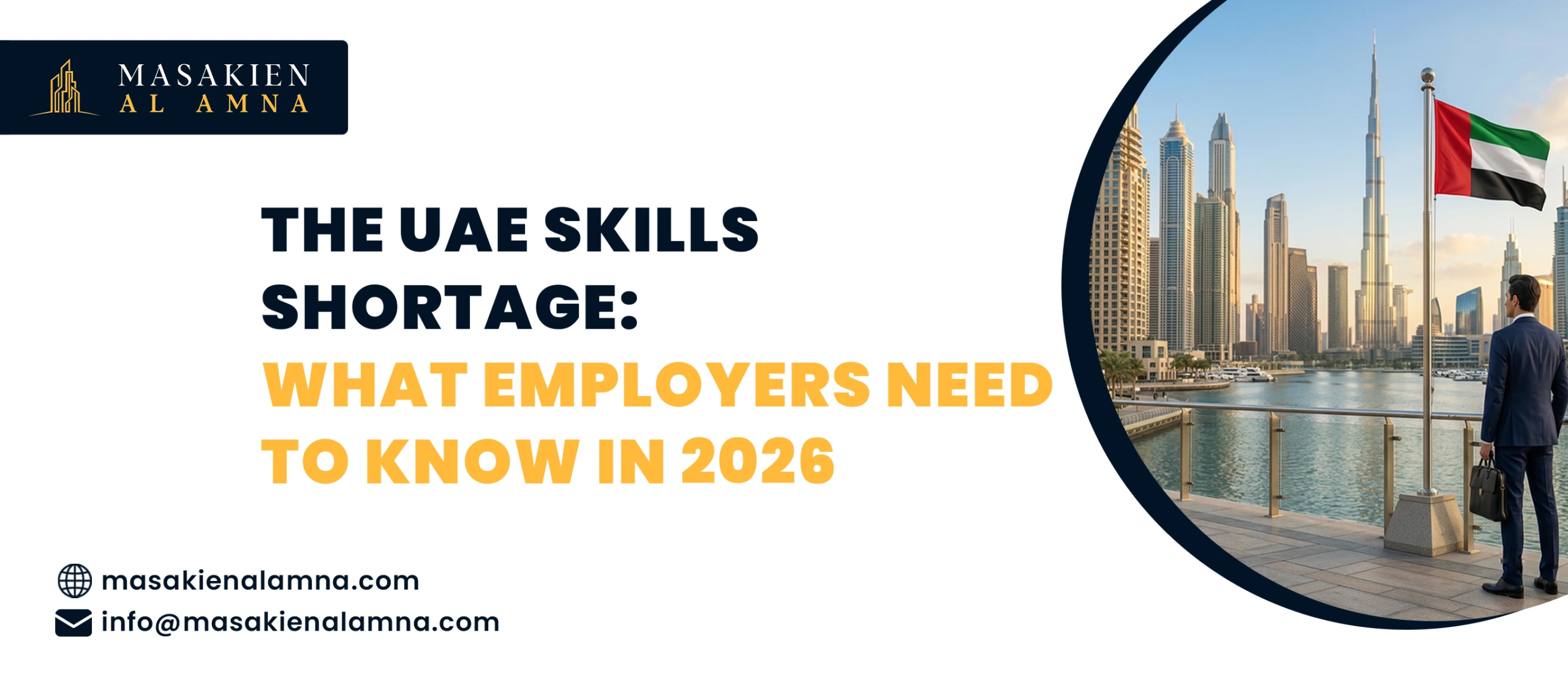
In 2026, employers across the UAE are dealing with one of the larger workforce problems in recent memory—a widening skills shortage. Whether it’s technology and healthcare, or construction, logistics, finance, and hospitality, organizations are finding it harder than expected to hire for key roles. The candidates available might have experience, but not always the exact mix of technical know-how and practical background. So, understanding why the gap keeps widening, and using proactive hiring tactics, is becoming pretty much a must if companies want to stay competitive in this fast-moving market.
What Is the UAE Skills Shortage?
The UAE skills shortage is, in simple terms, the growing mismatch between what employers ask for and what the current workforce can actually deliver. Even though thousands of professionals relocate to the UAE each year, many businesses still struggle to land people who have specialized competence, relevant industry certifications, leadership ability, and the digital capabilities that modern roles demand.
This problem isn’t only about job seeker volume. It’s more about aligning employers with professionals who offer the right balance: technical knowledge plus real-world practice, adaptability, and also those soft skills that help people work well when things change quickly.
Why Is the Skills Shortage Increasing in 2026?
Rapid Economic Diversification
The UAE is not really depending only on oil and gas anymore. Big investments in technology, renewable energy, AI, fintech, healthcare, tourism, logistics, manufacturing, and sustainability have also made a lot more room for jobs. But you know, when industries start moving faster than training programs can really adjust, the need for specialized people keeps growing faster than the supply.
And with new business lanes showing up, they need specialists, advanced technical know-how, proper certifications, and some kind of international track record. Still, many hiring teams notice that the talent they can reach doesn’t have these exact capabilities, so the whole recruitment process becomes harder and harder.
Digital Transformation Across Every Industry
Nearly every organization in the UAE is putting money into digital transformation projects. Firms are rolling out cloud services, cybersecurity defenses, AI-driven automation, big data analytics, IoT, ERP systems, and digital customer experiences too.
These technological developments kind of insist that professionals have modern digital know-how, but such skills are still kind of hard to find in enough numbers. In practice, companies are competing pretty fiercely for software engineers, cybersecurity analysts, cloud architects, AI specialists, data scientists, and digital change consultants.
Growing demand for seasoned professionals
A lot of UAE employers lean toward people who already have Gulf experience, mainly because they tend to understand local rules, workplace culture, customer expectations, and the usual industry standards
But there is still a shortage of experienced professionals. As more businesses chase the same pool of talent, salary expectations start climbing, hiring cycles take longer, and keeping staff becomes increasingly tricky.
Expansion of mega infrastructure projects
Big infrastructure activity keeps moving forward across Dubai, Abu Dhabi, Sharjah, and a number of other Emirates. Smart cities, transit systems, commercial growth, renewable power ventures, plus industrial expansions all need skilled engineers, project managers, architects, surveyors, technicians, and construction specialists.
And because the pace stays so fast, the need for highly qualified people has really jumped, which ends up causing shortages across engineering as well as construction sectors.
The Impact of Skills Shortages on Employers
Longer recruitment cycles—sort of like it used to be a quick sprint, but now it turns into this many-months kind of situation. Hiring that once took just a few weeks may now drag on for several months. Employers end up spending extra time on sourcing people, interviewing, going back-and-forth on offers, and, yeah, waiting on visa processing.
Because the hiring timelines stretch out, business projects can slide, productivity gets hit, and the remaining team gets more pressure than before. Sometimes it feels like the whole organization is holding its breath. Check out our latest blog post on Why UAE Is Becoming the Logistics Hub of the Middle East.
Rising recruitment costs
The competition for skilled professionals has gotten much tougher. That means salary expectations keep climbing, relocation costs show up more often, and agency fees, visa processing expenses, onboarding investments, plus employee benefits,, start piling in. Employers who don’t plan for these added costs might find it hard to land top talent in time, especially when competitors move faster.
Increased employee turnover
When professionals are in high demand, they often get offers from multiple employers, and not just a single “maybe later” message. If a company can’t match competitive pay, career development paths, and a genuinely strong workplace culture, turnover may rise. In practice, replacing experienced employees again and again can chip away at productivity, and it can also drain organizational memory—the knowledge people leave behind.
Delayed business growth
Skills shortages can slow expansion, because teams can’t be assembled quickly enough. When hiring drags, project completion tends to suffer, customer service quality can dip, innovation often gets delayed, and revenue growth gets tougher. In addition, companies facing persistent talent gaps may struggle with adopting new technologies or even entering emerging markets that look promising on paper.
Skills Employers Should Prioritize in 2026
Technical skills
How Employers Can, kind of, Overcome the Skills Shortage
Expand International Recruitment
Instead of leaning only on local hiring, businesses can look outward a bit, into international talent markets. Bringing in recruiters or professionals from countries that have solid technical education and very relevant industry experience can really stretch the talent pool, almost immediately.
Also, partnering with experienced international recruitment agencies makes the whole process less messy. Candidate sourcing gets smoother, documentation is handled more carefully, compliance becomes clearer, and visa processing is usually way faster.
Invest in Employee Upskilling
Training current employees can be, in many cases, more cost-effective than replacing them from scratch. Organizations should push continuous learning through certifications, online courses, mentoring arrangements, leadership development tracks, and technical workshops.
When employees upskill, they stay flexible with changing tools and evolving technologies. And honestly, it also tends to support retention, which helps long-term workforce stability too.
Strengthen Employer Branding
Top candidates often check employers just as intensely as employers check them. Companies should build a strong employer brand by talking up career growth, sharing employee success stories, describing workplace culture, emphasizing learning programs, and offering benefits that feel genuinely attractive.
A good employer reputation doesn’t just “look nice”; it can speed up recruitment and also improve offer acceptance rates because fewer people hesitate.
Partner with Specialized Recruitment Agencies
Specialized recruitment agencies usually know the real hiring rhythm in each sector. They keep extensive talent networks, and they can spot qualified people faster than a generic approach.
When employers outsource recruitment to experienced partners, they typically cut down hiring time, increase candidate quality, and can keep their focus on core business operations instead of getting stuck in the early stages.
Use AI-Powered Recruitment Technology
Nowadays, recruitment platforms use artificial intelligence to automate things like candidate screening, resume matching, interview scheduling, and talent analytics, sometimes even in ways that feel almost hands-off. In practice, these systems can speed up hiring while helping recruiters spot the most suitable candidates quicker than old-school methods.
Future Outlook for UAE Employers
In the UAE, the workforce keeps shifting as new technologies reshape industries and as government initiatives bring in global investment. Employers who lean into workforce planning, continuous learning, digital recruitment, and international hiring approaches are more likely to handle future talent shortages with less friction.
Instead of treating the skills shortage like a temporary wall, businesses can use it as a chance to grow teams that are more resilient, more diverse, and more future-ready. The ones investing in people today will be in a stronger spot to lead tomorrow’s marketplace, you know, when competition gets even tighter.
Conclusion
The UAE skills shortage in 2026 is already causing serious recruitment headaches across technology, healthcare, construction, logistics, hospitality, and many other sectors. Since companies are all chasing specialized talent, employers need to go beyond traditional hiring and shift toward smarter workforce planning. Contact us as That means putting money into employee development, widening international recruitment, using recruitment technology, and working with trusted staffing experts who actually know the market.
Organizations that act early on the talent gap today should be better positioned to push innovation, improve day-to-day efficiency, and reach sustainable growth in the UAE’s fast-changing economy.