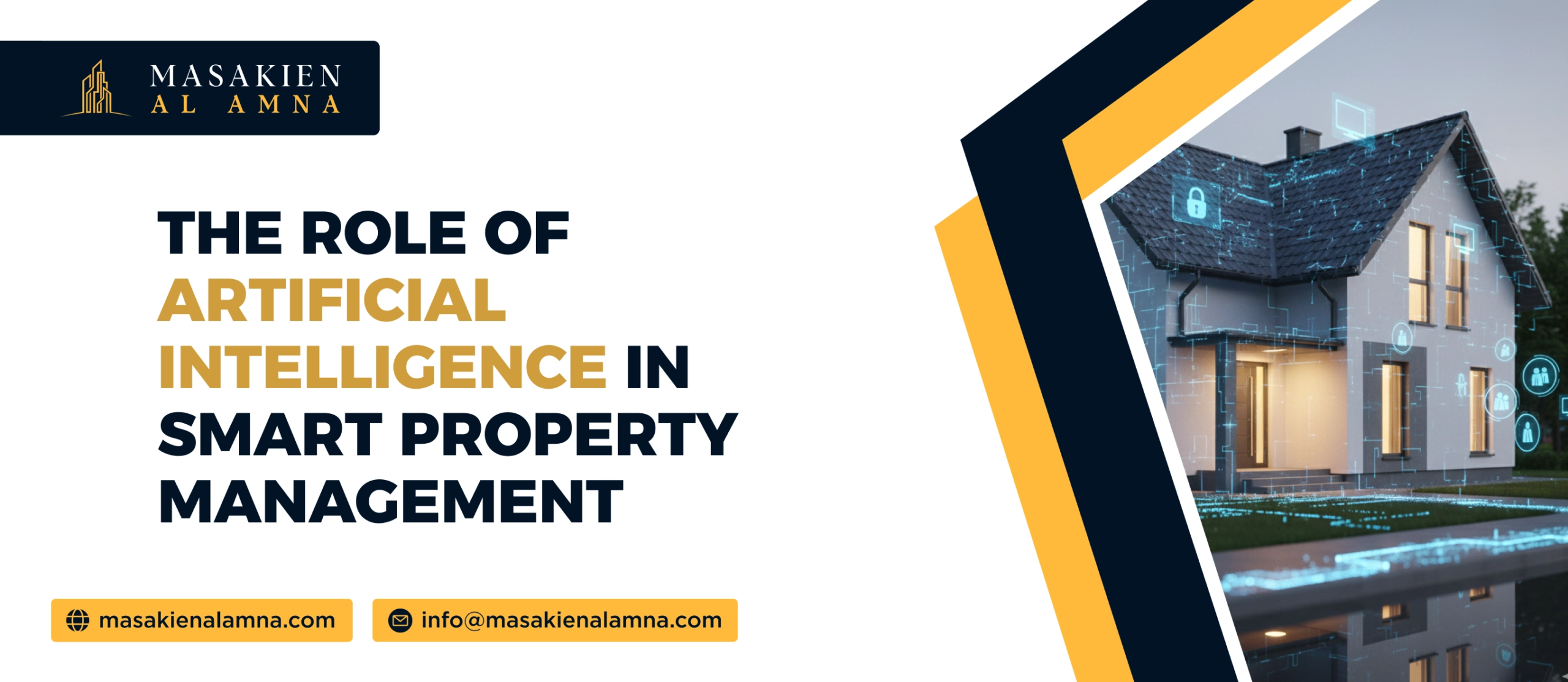
The transformation of the real estate and property management sector is underway, and one of the main forces behind that transformation is Artificial Intelligence (AI). The industry that used to rely heavily on human labor, inspections, telephony, and paper transactions has changed to a place relying on data, automation, and constant intelligence.
By forecasting maintenance concentrations, raising tenant happiness levels, and maintaining building safety, property management’s AI association is establishing brighter and more efficient systems. Thus, through AI, property managers not only save time and money but also get to make decisions that will be beneficial to the long-term run of the property.
- Making Sense of Smart Property Management
Definition and Core Concept:
Smart property management is the use of interconnected devices such as sensors, automated processes, and AI to manage each day’s property management operations more effectively and faster. The technology relies on data analysis through real-time monitoring to make the maintenance plans and energy consumption allocations with tenant communication— all taken care of from one central system.
Integration of Technology:
Smart property management solutions not only centralize several technologies but also include IoT (Internet of Things), artificial intelligence, and cloud computing. For example, IoT sensors take up building data such as temperature or equipment performance, which AI then assesses to give the most credible recommendations. This assimilation sets up a monolithic environment that keeps the property operating smoothly without any periodic human oversight.
Why AI Matters:
AI becomes the prominent factor in this scenario by its ability to learn from data. Static software systems, on the other hand, do not possess this feature, and AI tools are always refining their predictions and replies. AI, whether it’s in the area of rental price prediction or spotting signs of maintenance issues at the very beginning, provides effective and actionable insights to property managers, enabling them to be proactive in dealing with issues, thus ensuring they do not get caught up in problem situations.
Predictive Maintenance and Equipment Monitoring
Early Problem Detection:
Predictive maintenance one which is already applied in property management, majorly through AI, is early trouble detection. Usually, the failure of systems like HVAC or elevators is monitored through AI, but here again, the AI tool measures and monitors each of the parameters from the start to the time of detection. The patterns that indicate a fault, e.g., the temperature or the sound/vibration, are captured and logged long before the actual fault is detected, thus giving managers the chance to act up and avoid the problem.
Automated Alerts:
Property managers or maintenance teams get the issue alert notifications triggered by the smart systems automatically. One such example would be the AI lease team being informed about a leaking pipe or a faulty electrical connection, but much before it causes larger damage. This reduces the waiting time for fixing the issue, improves the safety of the tenants, and decreases inconvenience.
Cost Efficiency:
AI contributes to the cost factor by winning the case for the less expensive emergency repairs route due to the early addressing of problems. Predictive maintenance not only includes new building facilities but also prolongs the life of building equipment, which leads to huge savings in terms of cost in the long run.
Data-Driven Insights:
AI is no longer confined to the role of a problem detector; it is now able to track the maintenance history as well and recommend the best periods for servicing and replacement. With this element of AI, the scheduling of maintenance during non-peak hours becomes possible, thus avoiding the impact on business and incurring unnecessary repair costs, which optimizes both costs and operations.
Smart Energy Management
Energy use is a big worry for landlords in terms of both cost and eco-friendliness. AI-driven energy management systems can not only look into usage but also even change it as it goes.
Smart lighting and heating, for example, can change according to how many people are there or the weather. AI helps to discover where energy has been wasted and presents ways for consumption to be curbed. This is not only a help to lower utilities but also to support eco-friendly practices, which are often among the most important considerations to tenants and investors.
Additionally, not only does an energy-efficient operation generate savings throughout the years, and elevates the property’s worth. Properties that use less energy are more appealing to renters, and by going green, not only the tenants but the landlords too would be in harmony with the local legislation regarding the environment. Through AI, energy waste is kept to the barest minimum, thus property owners are able financially and able to promote eco-friendliness financially.
Enhanced Security and Surveillance
The safety of the building and the people living or working therein is a primary concern for landlords and renters. The use of artificial intelligence in the form of modern surveillance and access control systems marks a turning point in the security chapter of properties.
A camera system that employs AI can, at the same time, process video streams and detect strange or suspicious acts, notifying the security team almost instantly. The access management done by smart locks and fingerprint readers is taking a step further regarding granting entry to only the approved individuals into the building.
Besides, such systems are very meticulous in keeping the logging of activities, which is a great help for managers in boosting their security by watching the activities and acting right in time.
Data-Driven Decision Making
AI isn’t limited to automating tasks; it also renders multifaceted data through data analysis. Property managers can get to know the fluctuations in occupancy, the changes in the market price, the demand for and the supply of rentals, as well as the preferences of the tenants, through AI.
The above data would then guide the managers in making and taking the right decisions regarding the maintenance, renovation, and investment of the property. For instance, AI can recommend the perfect rental price for a unit by considering both the market conditions and the town’s historical rental records. It can also highlight which facilities or enhancements are going to raise the existing tenants’ satisfaction the most and, thus, bring new residents.
Another point that can be made in favor of AI is that it opens the door to granting each tenant his/her personalized experience. Through the monitoring of each tenant’s lifestyle and their inclinations, management can provide tailored services, communications, or promotions, which will lead to a close and good relationship between tenants and property management. In the end, the management agents will spoil their customers with this data-driven strategy and stay ahead of competitors, making the simultaneous execution of tenants’ and owners’ good and informed, strategic decisions.
Future Trends in AI Property Management
The integration of AI into property management will still be very substantial in the future. The primary urban living setup will be comprehensively constructed; with the advancing smart cities, AI systems will be accommodating each property as a part of a larger urban ecosystem. Thus, it will be a swifter and more eco-friendly process, and the urban areas will be developed in a better way almost everywhere.
Virtual tours of the properties enabled by AI and VR (virtual reality) will be the norm, and tenants will be able to see the properties from afar. Besides that, AI can predict the real estate trends, which would be of enormous help to both investors and property managers in not only reacting to but also shaping market shifts and making their plans accordingly.
Moreover, AI frameworks will gradually increase their learning and power with time . The machine learning techniques will get better and better in maintenance forecasting, energy saving, and tenant service improvement; thus, the potential AI to disrupt property management is really huge, and the early the contribute will enjoy a huge benefit in the competition between the real estate players.
Conclusion
Artificial Intelligence has been the main driver in the changing of the property management landscape. The AI technologies applied in real estate have made predictive maintenance, automated clerical tasks, smart energy use, improved security, and data-driven decision making among the properties; thus making them more efficient, less costly, and more attractive to tenants.
It has become a necessity for property managers and real estate investors to implement AI-powered tools in order not to fall behind, to maintain operations that are environmentally friendly, and to provide service that is unrivaled. Contact us as the adoption of AI by the property management sector means a shift from traditional approaches characterized by reactivity to systems that are proactive, intelligent, and highly efficient.
The era of AI-driven smart property management is here. If you are a property manager, owner, or investor, do not wait until tomorrow’s real estate market becomes a reality; instead, start looking into AI solutions today.