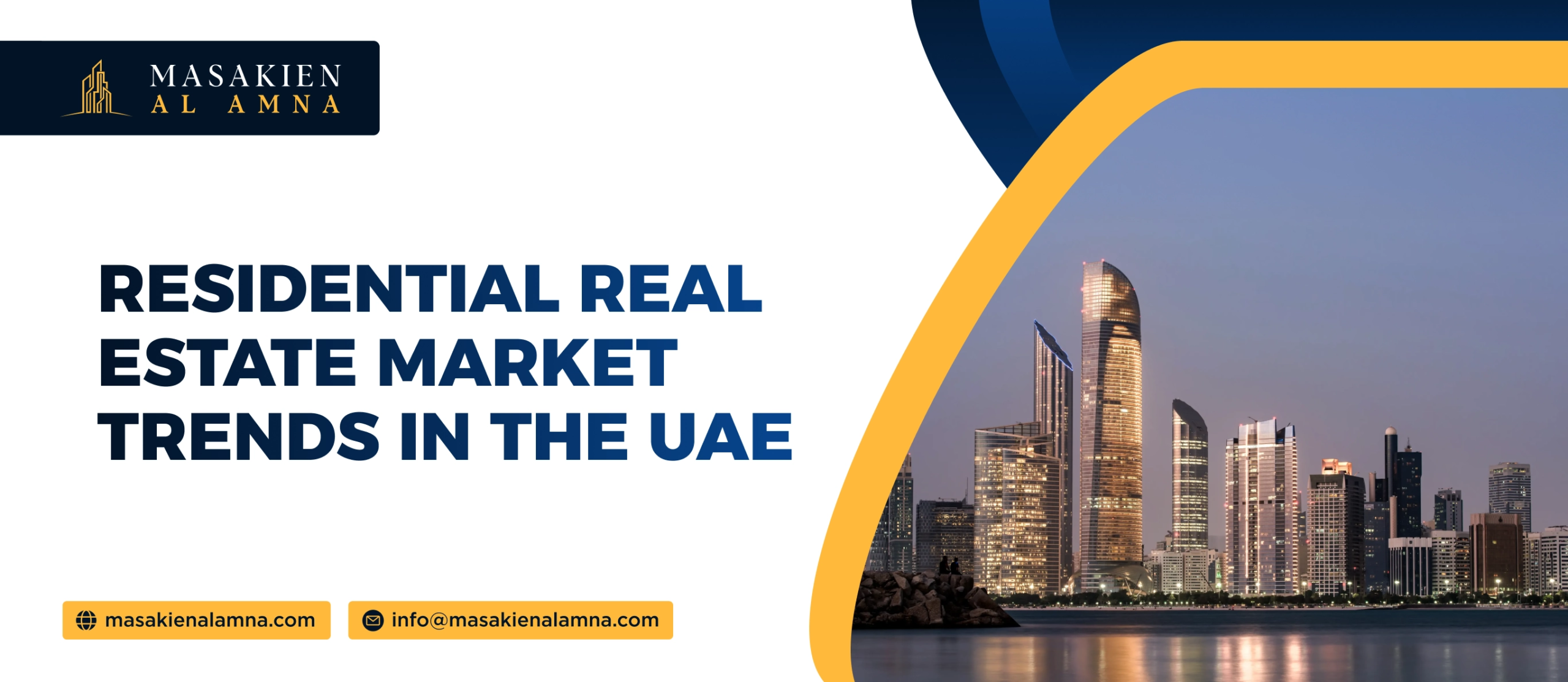
The residential real estate market in the United Arab Emirates has emerged as one of the most dynamic property sectors in the world. The country has experienced economic recovery, while foreign investment has increased and infrastructure development has continued to progress during the last three years. The major emirates, which include Dubai, Abu Dhabi, Sharjah, and Ras Al Khaimah, experienced changes in housing demand and pricing patterns and buyer behavior because of these developments.
The residential market of the UAE shows stable conditions, which demonstrate market maturity and strategic development in 2026. People today purchase real estate because they want properties that offer lasting value, better living conditions, and substantial rental revenue. The blog provides an overview of essential residential property market trends while conducting an in-depth study of each component.
-
The population has increased, and there is a high demand from expatriates.
The country continues to attract skilled professionals, entrepreneurs, and investors from Asia, Europe, and Africa. New residents create higher demand for apartments, villas, and townhouses, which serve as residential spaces.
Expatriates now choose to remain in the country permanently because they can access long-term residency programs, which include the Golden Visa and other government initiatives. Residents who have confidence in their long-term presence in the country will proceed to buy property. The residential sales market has experienced strong growth because people now choose to buy homes instead of renting them.
Multinational companies that establish their operations in Dubai and Abu Dhabi bring their executive staff and skilled workers who want to live in exclusive housing areas. The increasing job openings in technology, finance, tourism, and healthcare will result in higher demand for housing, which will create new housing needs.
-
Increasing Demand for Villas and Townhouses
The demand for villas and townhouses has grown faster than apartments in many parts of the UAE. Families prefer properties that offer private gardens, larger living areas, and access to community amenities.
Gated communities, which include parks, schools, gyms, and retail outlets, have become more appealing to residents. The integrated developments bring residents easy access to their needs while they experience better living conditions. The family-friendly neighborhoods in Dubai and Abu Dhabi have experienced price growth because of this development.
-
Property Price Appreciation and Rental Yield Growth
The residential market in the UAE has experienced significant price increases, especially in prime real estate areas. The limited availability of high-demand villa communities has led to rising housing costs. The population growth, combined with strong tenant demand, has resulted in higher rental prices.
The UAE property market provides competitive pricing together with appealing rental returns when compared to global markets such as London and New York. Dubai attracts investors because its rental returns typically range from 6% to 8% based on property location and type.
Economic diversification has led to price increases for both products. The UAE maintains long-term stability through its development of non-oil industries, which include tourism, logistics, renewable energy, and digital innovation. Economic growth leads to economic expansion because all sectors of the economy develop.
-
Growth in Off-Plan and Secondary Market Transactions
The property market in the UAE includes both off-plan properties, which are still under construction, and properties that are currently available for purchase. Off-plan sales have developed strong growth during recent years because construction companies provide customers with payment plans that enable them to pay for projects before making payments on their complete project costs. The system attracts new investors who want to enter the market together with international buyers.
The secondary market has experienced expansion during this period. The majority of customers choose finished properties because they want to start earning rental income without delays from building projects. The resale market shows strong demand for established communities that provide complete infrastructure services.
The market remains stable because it offers two distinct property types for sale, which include both off-plan properties and ready-to-move-in homes. The investment preferences of buyers determine which investment opportunities match their risk tolerance and investment objectives.
-
Sustainability and Smart Living Trends
The use of smart home technology continues to grow as a popular trend. Automated systems for lighting, security, and climate control now exist in all modern buildings. Homebuyers show strong interest in properties that provide both cost savings on utilities and digital functionality through smart home technology.
Smart home technology continues to expand its current market presence. Current buildings now use automated systems for their lighting needs, security requirements, and climate control purposes. Homebuyers choose properties that have lower operating expenses because these properties offer digital networks that support their daily activities.
The construction of walking paths and cycling routes, together with green spaces, demonstrates how communities are adapting to encourage healthier living. Property buyers now expect smart and sustainable developments to be standard features of residential properties.
-
Emerging Investment Hotspots
The other emirates have begun to draw interest from investors, yet Dubai remains the main hub for residential investments. Abu Dhabi provides investors with dependable returns because government workers and corporate staff show strong interest in its property market. Sharjah serves as an attractive location for middle-income families who want affordable housing near Dubai.
The United Arab Emirates has established itself as a secure property market because of its stable governance system, its investor-friendly taxation methods, and its ongoing development of regulatory frameworks.
The United Arab Emirates market has become less dependent on Dubai because the developed properties in both Abu Dhabi and Dubai now function as their own independent markets. Check out our latest blog post on ROI Trends Across Residential, Commercial, and Mixed-Use Properties
-
Strong Regulatory Framework and Investor Confidence
The mortgage market has expanded its accessibility, which enables residents to obtain home loans at attractive interest rates. The foreign ownership regulations that apply to freehold areas make the market more attractive to international investors who wish to enter the market.
The United Arab Emirates property market stands out as one of the safest global markets because it maintains stable governance and investor-friendly tax systems and continuously enhances its regulatory framework.
Conclusion: A Stable Yet Growth-Oriented Market
The residential real estate market in the UAE in 2026 reaches equilibrium through three main factors, namely increased demand, improved infrastructure, and government support. Contact us as the market reaches maturity due to population growth, economic growth, and sustainability initiatives, as well as strong regulatory frameworks that help create a future-ready market.
The UAE property market delivers attractive rental yields to investors while showing potential for future property value increases. The end-users receive world-class communities that provide safety and high-quality living conditions. The residential sector will continue to be a fundamental element of the UAE economy as development progresses across different emirates.