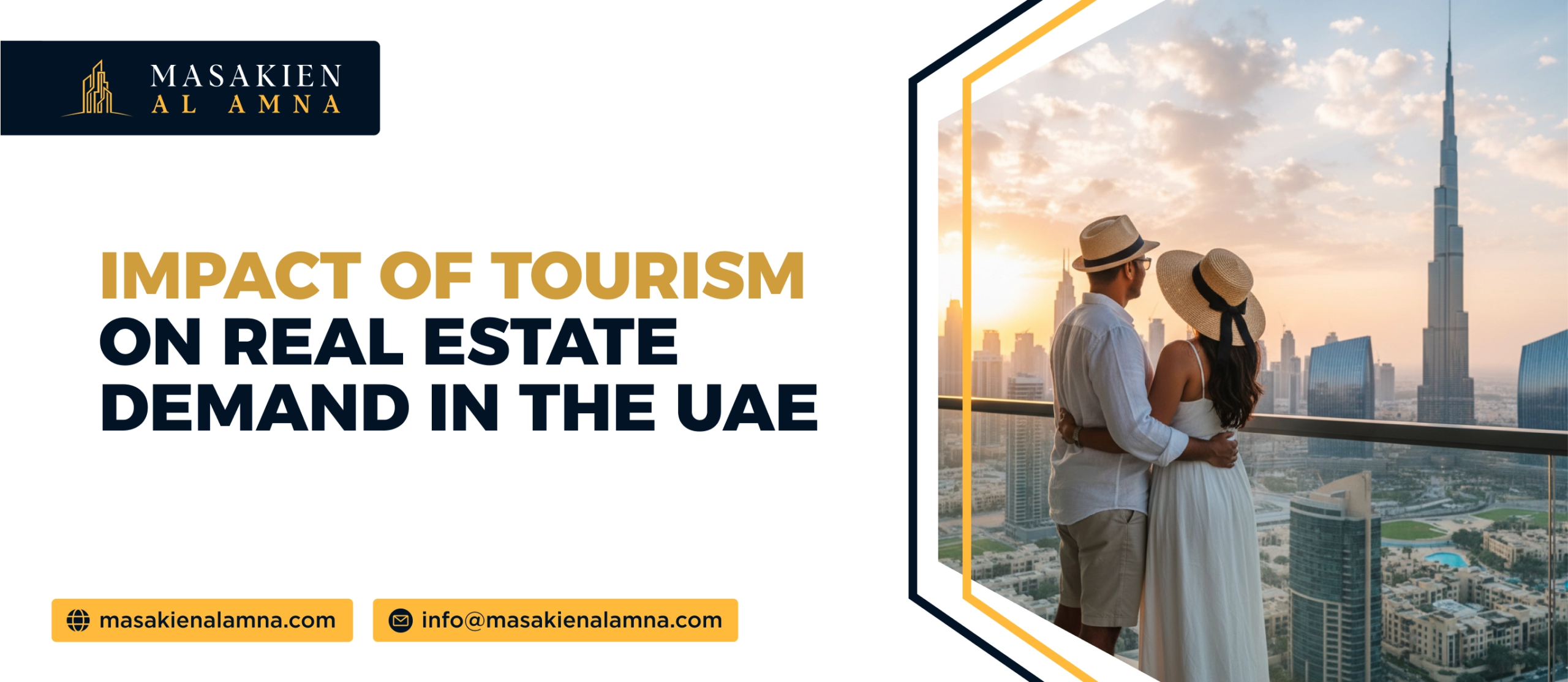
The United Arab Emirates (UAE) has witnessed a remarkable transformation from a barren desert to a world-class tourist destination; hence, the economy of the nation is supported by various sectors, making up a jigsaw puzzle of economic development wherein tourism and real estate are two of the primary pieces. However, the travel industry’s glitter and glamour, besides its aesthetic aspect, has brought about a huge impact on the real estate sector as well.
The relationship between tourism and real estate in the UAE is powerful. More and more tourists’ arrivals imply bigger needs not only for hotels and serviced apartments but also for holiday homes and commercial areas. The tourism sector makes life easier for all three parties—the construction companies, the investors, and the landlords. This post will analyze the continuous impact of the UAE’s flourishing tourist business on all aspects of real estate, from super-luxury villas to short-term rentals and more.
Tourism as a Major Economic Driver
Tourism has become an integral part of the UAE’s economy and thus, one of the major contributors to its diversified economy. Government statistics reveal that the travel and hospitality industry alone accounts for the annual contribution of billions of dirhams to the country’s GDP, along with the employment of thousands of locals and foreign workers. This strong performance gives rise to investor confidence and ultimately leads to the expansion of the economy.
Sustainable tourism development has become a mandatory part of the UAE Vision 2031 and the Dubai Economic Agenda D33 government programs, highlighting that tourism is a significant factor in the country’s long-term growth. These strategies have led to the infrastructure development—airports, roads, and luxury resorts—which in turn has a direct impact on the demand for real estate.
One example is that with the increase in tourism, there is an increase in demand for hotels, resorts, and residential properties in the vicinity of the tourist attractions. Developers react to this situation with the unveiling of new mixed-use projects that come along with the facilities of hospitality, retail, and living spaces under one roof.
Expanding the Demand for Short-Term Rentals and Holiday Homes
The increased number of tourists and the emergence of websites like Airbnb, Booking.com, and the licensed holiday homes offered by Dubai Tourism have all caused significant changes to the rental market in the UAE. This trend has given rise to a new division in the real estate market, which is the short-term rentals and serviced apartments.
In the real estate locations of Dubai Marina, Downtown Dubai, Jumeirah Beach Residence (JBR), and Palm Jumeirah, where the demand is high, property owners are making high rental yields by changing their apartments into short-stay homes. The Dubai government has also contributed to this change by laying down transparent rules and regulations to enable landlords to rent out their properties to tourists legally.
Real estate developers have been quick to spot this trend and are now actively working on new projects that are specifically designed to meet the needs of the holiday-home market, with such features as fully furnished apartments, flexible terms of lease, and property management services. Thus, both the investors and the tourists draw their benefits—one by getting a steady inflow of cash and the other by enjoying the comfort and convenience of their residential stays.
Luxury Real Estate Flourishes on High-End Tourism
DUBAI, UAE — The United Arab Emirates (UAE) has been internationally recognized for its luxury tourism offer. The five-star hotels, gourmet restaurants, shopping in high-end malls, and exclusive experiences all characterize the UAE’s luxury tourism. The introduction of affluent travelers has resulted in a simultaneous boom in the luxury real estate segment. Check out our latest blog post on How to Start a Career in Real Estate Management
The upscale visitors are usually searching for the prime properties that promise isolation, honored status, and amazing views. Hence, locations such as Palm Jumeirah, Emirates Hills, Downtown Dubai, and Saadiyat Island have become landmarks of opulence and affluence globally. These regions lure both the international holiday-makers who wish to buy second homes and the foreign investors seeking real estate portfolio diversification.
Residences bearing the names of luxury hotels like The Address, Atlantis The Royal, and Bulgari Residences are very much sought after. This segment has high-end hotel-serviced residences, which are actually a fusion of hospitality and real estate ownership that is beneficial for investors and tourists alike.
Commercial Real Estate Continues to Reap the Benefits through Tourism Infrastructure
Tourism brings residential properties down but still gets the commercial real estate market pumped up. With the growing number of tourists to the UAE, the related businesses in the hospitality, retail, and entertainment sectors are the quickest to expand.
The shopping malls, restaurants, event venues, and leisure activities all need commercial space, which in turn is causing a rise in the demand for such retail properties. Travel agencies, event organizers, and transport service providers are all companies that are renting offices in prime business areas like Business Bay, DIFC, and Al Maryah Island, which are considered the hottest spots for tourism-related offices.
The crossroads of these mega-events, like Expo 2020 Dubai and the forthcoming global exhibitions, have notably sped up the whole process of setting up hotels, entertainment locations, and infrastructure. These advancements not only lure tourists but also bring in business and real estate investments for the long run. The UAE’s capability to manage such gigantic international gatherings emphasizes how tourism helps hatch commercial property development.
Foreign Investment and Real Estate Regulations
One more factor that mainly attributes tourism as the stronghold of the real estate market is foreign investment. The majority of the international tourists who visit the UAE get captivated by its lifestyle, safety, and modernity, which eventually leads them to invest in the local real estate markets.
The establishment of freehold zones in Dubai and Abu Dhabi has proved to be a landmark, as it has permitted foreign citizens to buy, sell, and lease properties without any restrictions. In addition, programs like the Golden Visa and retirement residency have boosted the long-term investment of expats and frequent visitors.
Such pro-investor regulations forge a solid link between tourism and property ownership. For example, an individual who visits Dubai for a business conference may end up buying a holiday home after tasting the city’s lively lifestyle.
Seasonal Demand and Market Stability
UAE tourism is seasonal, and the peak months are usually from October to March when the weather is nice and outdoor activities are at their best. During these periods, there is a high demand for hotels, serviced apartments, and short-term rentals.
This seasonal increase in the number of visitors has a direct effect on the markets for properties, because owners receive more money from rents and the units are more often occupied. Real estate developers frequently schedule the launching of new projects or sales promotions for the peak seasons so that they will be able to win over not only the local but also the international buyers.
The remarkable thing is the effect that the steady nature of the tourist influx has on market stability. Even if the world economy faces uncertainties, the UAE’s distinguishing features of safety, luxury, and tax-friendliness keep the number of visitors at a high level and thus produce the demand for properties that is steady throughout the year.
Future Outlook: Sustainable Tourism and Smart Real Estate Growth
Towards the future, the real estate sector in the UAE will always be dependent on the country’s changing tourism strategy. The government has been emphasizing the development of green tourism and eco-friendly living. This has allowed the establishment of projects that are strictly about green buildings and thus the birth of new markets for them.
Dubai Creek Harbor, Expo City Dubai, and Saadiyat Cultural District are examples of development combining sustainability with smart technology, thereby attracting the so-called “green” investors and travelers. These progressive actions not only help to mitigate climate change but the properties involved also reap the benefit of increasing their long-term valuation.
Besides, newly built houses come with various home automation, smart hospitality solutions, and AI-powered real estate management systems as part and parcel of every project. This cutover to high-tech is in perfect synchronization with the UAE’s ambition to be a pioneer in the realm of sustainable urban living—thus, the link between tourism and real estate development is even stronger.
Conclusion: A Symbiotic Relationship
The interaction between real estate and tourism in the UAE is a profound one, and the real estate sector is one of the beneficiaries of this relationship. A rise in tourists Results in more demand for housing, commercial, and hotel properties. However, the luxury real estate infrastructures are very welcoming to trips and so, effortlessly, funnel more tourists to the region.
Tourism has been a major player in the development of the whole UAE real estate market. Contact us whether it is about short-term rentals or the most expensive villas or the developers’ large-scale projects. The government measures, attractive regulations for investors, and constant technological changes are just some of the factors that will make this bond even stronger in the future.