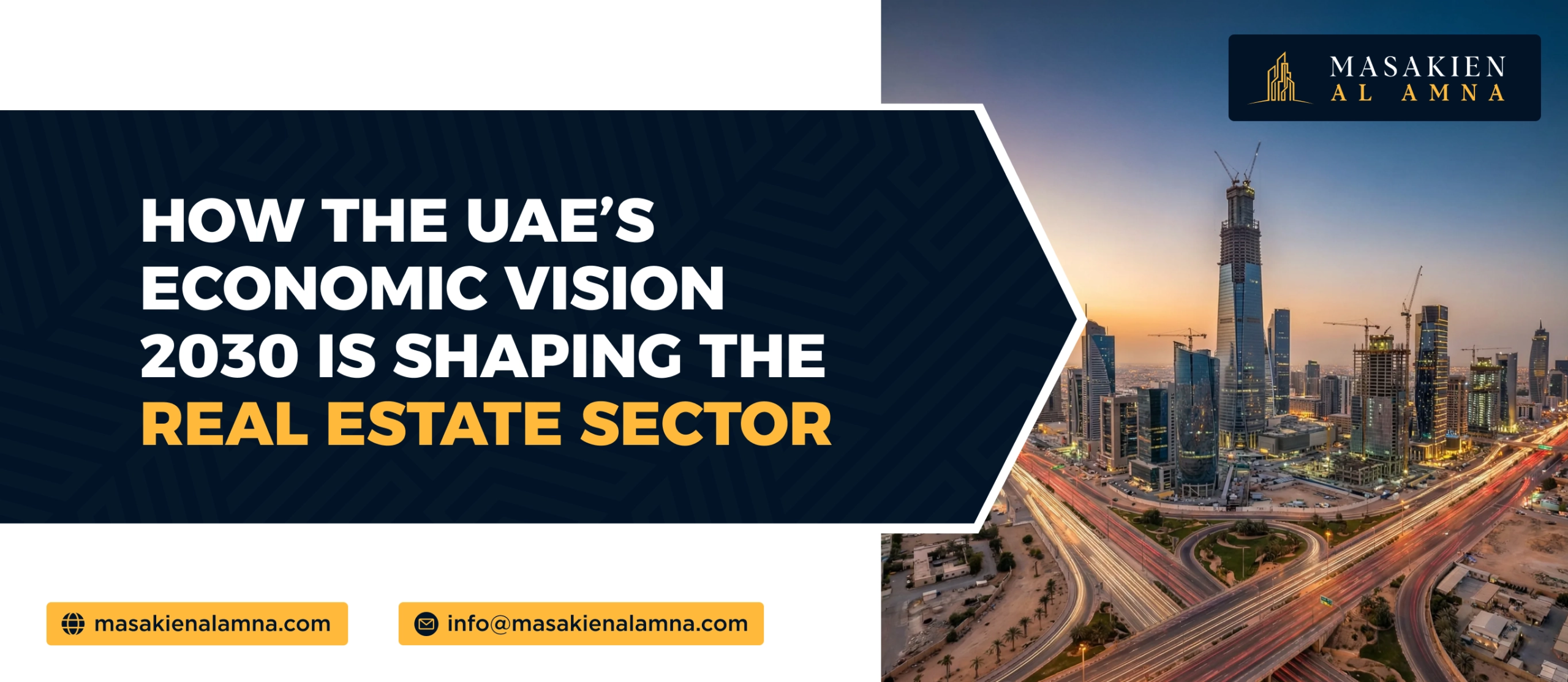
The UAE Economic Vision 2030 is a long-term plan that aims to change the country’s economy from being solely reliant on oil to a combination of various sectors, with knowledge and technology being the main ones. It focuses on the aspects of innovation, sustainability, and competition on a global scale in order to guarantee the growth of the economy in the long run. The real estate sector is the very heart of this vision because it directly affects the GDP, can attract overseas investments, and is the source of job creation.
The alignment of the developers, investors, and policymakers’ strategies with Vision 2030 is drawing a much more organized and appealing property market. The aforementioned shift guarantees that the real estate industry of the UAE will not only become a crucial participant in the economic development of the nation but also meet the changing demands of the population.
The Role of Real Estate in the UAE’s Economic Growth
Real estate is one of the major pillars supporting the UAE’s non-oil economy. It is a significant source of funds and a major contributor to the national revenue. The residential, commercial, and mixed-use projects are not only enhancing the dwelling and office supply but also encouraging the hiring of thousands of workers in such sectors as construction, hospitality, and services.
The demand for and investment in real estate have increased due to mega infrastructure projects like Expo 2020 and the expansion of cities. The government, through its Vision 2030, has linked real estate with the economic objectives; hence, property development is to support sustainable urbanization, higher living standards, and a globally competitive investment climate.
Government Policies Driving Real Estate Transformation
Foreign Ownership & Investor-Friendly Laws
The UAE has implemented policies that have changed the landscape of real estate in the country. Expatriates and foreign investors are now allowed to purchase freehold properties in cities like Dubai, Abu Dhabi, and Sharjah. Such a step is likely to attract more foreign capital to the country; thus, the residential as well as the commercial property market will get a boost.
Regulatory Reforms and Market Transparency
The main goal of recent regulatory reforms is to bring in higher levels of transparency and to protect the buyers, and this has been done through introducing, among other things, mandatory escrow accounts for off-plan property projects. Digital land registration systems make property transactions easier and require less paperwork, while the enforcement of clear regulations guarantees that developers and investors are applying the same practices.
These reforms not only make the market more secure and more transparent but also help to build trust between the public and the real estate sector. So, now investors do not feel vulnerable anymore since the UAE government is there to back them up by taking care of their interests and promoting fair business practices. The demand for properties to be built in these smart cities will be totally influenced by their imitability and long-term sustainability.
Infrastructure Development Under Vision 2030
Smart Cities and Urban Planning
The creation of smart cities and urban areas is among the Vision 2030 objectives, which include Masdar City and the smart areas of Dubai. These projects will rely on AI, IoT, and other modern technologies to minimize energy consumption, reduce waste, and enhance the quality of life of the city dwellers. Smart urban planning additionally prioritizes the development of mixed-use communities by interspersing residential, commercial, and leisure areas, leading to lively and effective living environments.
Transportation and Connectivity Projects
The UAE is increasing metro lines, highways, and airports as part of its strategy to enhance connectivity among residential, commercial, and industrial areas. This newly developed infrastructure will increase property reach, which will convert the areas lying outside of the city and the ones that are just starting to be developed into places where people want to live, and investors want to invest. Good transportation networks will also lessen commuting time, thus raising the overall quality of life and the demand for real estate in the areas that are well-connected. Check out our latest blog post on Why International Investors Are Choosing Abu Dhabi Real Estate
Sustainability and Green Real Estate Initiatives
Eco-Friendly Buildings and Energy Efficiency
Sustainability is now and will be a major factor of Vision 2030 in the UAE, and green buildings are being encouraged. Solar energy, modern energy management systems, and eco-friendly materials have all been gradually adopted. This not only reduces the costs associated with running the buildings but also draws in investors and residents who care about the environment, thus providing a long-term value to the properties.
Net-Zero Goals and Sustainable Communities
The UAE has set its sights on going carbon-neutral by 2050, which, in turn, creates a demand for greener living and eco-friendly projects. The designs of the new housing locations and business areas with green parks, lighting that saves energy, and sophisticated garbage disposal systems are emerging.
These kinds of lifestyle advancements not only benefit the inhabitants personally but also attract global investors seeking long-term, environmentally friendly investments. Besides, with the above-mentioned sustainable living practices, the UAE will be able to position itself as a world leader in eco-friendly, urban living that is both modern and responsible.
Impact on Residential Real Estate
The Vision 2030 initiative has opened up the residential property market to various segments through its support of both affordable and luxury housing developments. It is through the affordable housing projects that citizens and residents have access to quality homes, ensuring social stability and urban growth.
On the other hand, luxury residential properties are luring rich investors and expatriates who want to have the best lifestyles. The measure of lifestyle trends such as co-living, wellness-centered communities, and integrated neighborhoods is dictating the housing demand and making the residential sector more vibrant and responsive.
Impact on Commercial and Industrial Real Estate
Office Spaces and Business Hubs
The UAE free zones and business districts, particularly the Dubai International Financial Centre (DIFC) and Abu Dhabi Global Market (ADGM), have stimulated by far the most demand for office spaces. It is the startups, SMEs, and corporations that are at the forefront of the trend towards flexible workspaces and co-working hubs; they are the ones who reflect the changing business environments.
Commercial development activities are taking place as a result of the Vision 2030 initiative that seeks to encourage innovation in business areas where individuals and companies can easily interact, and modern office facilities equipped with smart technologies will be the main factor behind the demand. Commercial real estate investors take advantage of the situation by enjoying the benefits of steady demand, high occupancy rates, and premium rentals.
Warehousing, Logistics, and Industrial Parks
The UAE’s geographical advantage as a prime global trading center contributes to the booming demand for industrial and logistics real estate. Hence, the construction of warehouses, distribution centers, and industrial parks is on the rise to support e-commerce transactions, import-export operations, and manufacturing.
The emphasis of Vision 2030 on trade, tourism, and logistics has a corresponding effect on the demand for industrial properties, which in turn opens up more opportunities for investors and developers. Furthermore, it is important to note that the establishment of properly managed industrial parks also helps in improving a country’s competitiveness in the international market, and this subsequently brings in foreign companies that look for solid supply chain infrastructure.
Increased Foreign Investment and Global Interest
The UAE’s stable economy, upscale investor policies, and Vision 2030 initiatives have brought global attention to the real estate sector. The International investors, which consist of high-net-worth individuals and institutional funds, have considered the UAE as a secure and lucrative property investment destination.
The demand for residential, commercial, and industrial properties has become constant worldwide. Vision 2030 has given the foreign investors the guarantee of economic stability, transparent regulations, and significant profits, hence turning the UAE’s real estate into the Middle East’s most preferred investment destination.
Challenges and Market Adjustments
In spite of its considerable growth, the UAE real estate sector is facing difficulties in areas such as supplying and demanding goods, where the over-saturation of certain locations should be avoided. Construction costs that are soaring, labor shortages, and sustainability compliance requirements are among some of the factors that could nibble at the profitability of the projects.
Moreover, global economic upheavals in areas like interest rates and inflation do affect the general mood of the investors. Nevertheless, the government’s proactive approach in planning, strategic infrastructure development, and policy changes is a continuous support to market stability and long-term growth, thus fulfilling the objectives of Vision 2030.
Future Outlook: What to Expect Beyond 2030
When we scan the horizon, the real estate market of the UAE opens the gate for new inventive and sustainable growth at its next level. The urban habitat of the future will be characterized by smart city projects, AI-driven real estate management, and green architecture. Investors will find both residential and commercial property valuation enhancement due to the strategic development plans that have been made.
The UAE is to set up the world’s highest standards for real estate quality, innovation, and sustainability, it will be pulling in long-term capital and reasserting its status as a global investment hub.
Conclusion: Vision 2030 as a Game-Changer for UAE Real Estate
UAE’s Economic Vision 2030 is a completely different manner of conducting deals in the real estate sector that previously was full of grey areas, a lack of transparency, and poor investor interaction.
Combined with the infrastructure development, sustainable initiatives, and global investment policies, the UAE will soon have a property sector that is able to support economic diversification and long-term growth. Contact us as Vision 2030 creates opportunities from which local and foreign investors are to reap the benefits. Developers, residents, and investors have to take this vision as a call to be part of the real estate market, which is the future, a global standard, and the most lively one.