
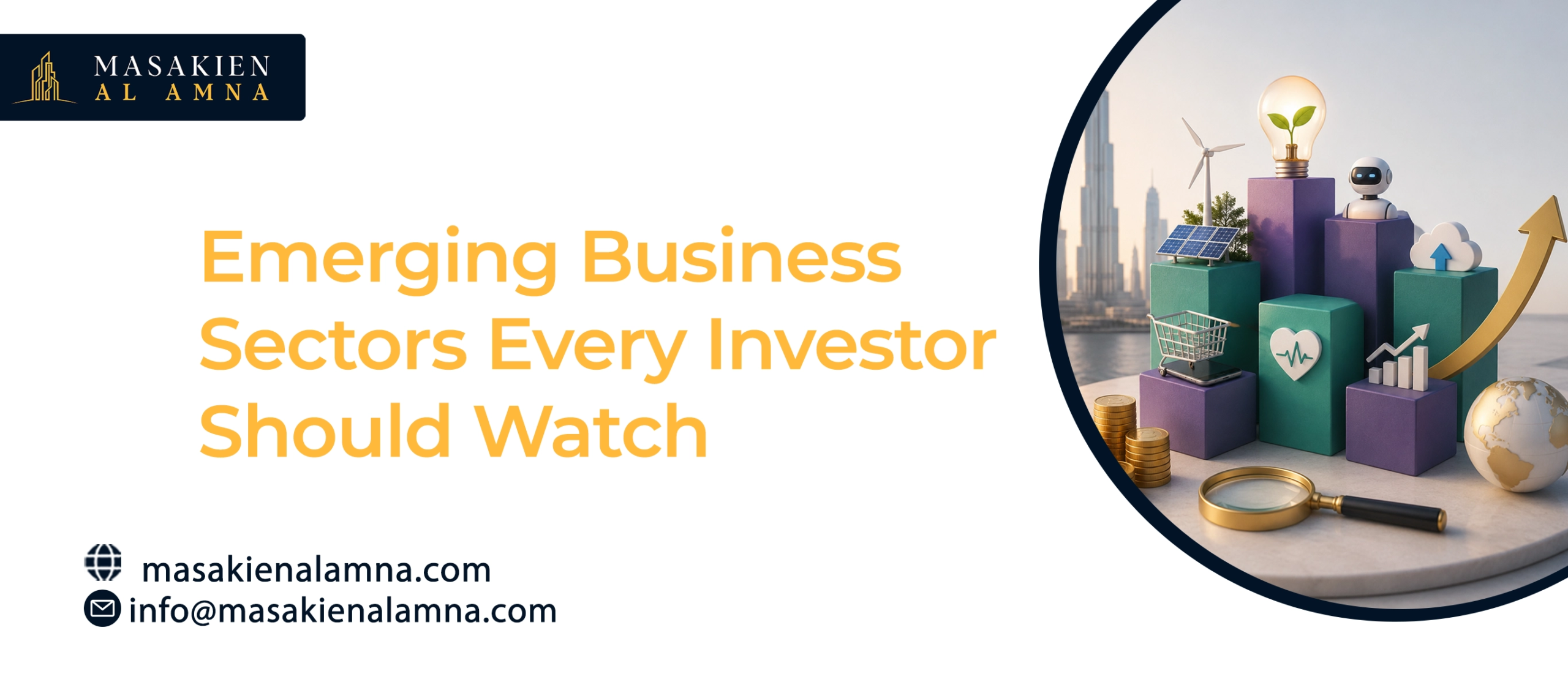
The UAE is no longer built only on oil. These days, people talk about it as a key spot for trade and investment in the Middle East. A few things are driving this change. The state has made new moves. Roads, ports, and other systems have improved. There are also rules that make it easier for outside money to come in. On top of that, there is more focus on technology.
Because of this, opportunities are showing up in fields that did not get as much attention earlier. The UAE government runs investment programmes that highlight areas it wants to push, such as manufacturing, transport and logistics, healthcare and life sciences, renewable power, ICT, and financial services. For investors, these changes can open doors. They may be able to take part in lines of work that could matter more in the years ahead. Still, new sectors can bring problems too. Some issues are linked to rules, others to technology, and some to day-to-day operations or buyer behaviour. Because of that, people should review what each sector really involves before putting money in.
Why New Sectors Are Important for UAE Investors
The UAE is working to diversify its economy. This includes more spending on technology, infrastructure, research and innovation, sustainability goals, and fields tied to knowledge. The Ministry of Economy has also named a set of foreign investment areas. These include fintech, healthcare, e-commerce, agritech, education, tourism, logistics, ICT, manufacturing, renewable energy, space work, and smart cities.
This push is not only a government plan. Private companies are also investing, and the two parts support each other. The UAE’s main investment platform talks about six priority sectors. It also offers opportunities across the seven emirates. That suggests new industries are now part of the wider growth plan for the country. They are not only small niche plays.
UAE: New Business Areas Investors Should Track
The UAE used to rely heavily on oil. In recent years, it has tried to build a wider economy. As a result, more businesses and funds are moving into the country. New government programs, better transport and facilities, and updated rules for foreign money have helped. Technology has also become a bigger theme. The UAE’s own investment channels point to several key areas, including manufacturing, transport and logistics, healthcare and life sciences, renewable power, ICT, and financial services.
For investors, these shifts mean there may be room to back industries that could grow faster later. At the same time, early sectors can bring tough issues. There can be rule changes, fast tech updates, higher setup costs, and demand swings. Because of that, it helps to review how each sector works before putting in funds.
Why these new sectors are on investors’ radar
The UAE is pushing for economic change in several ways. It is backing tech, building up infrastructure, and funding projects tied to innovation. Sustainability and knowledge-led business are also part of the plan. The Ministry of Economy has named a set of areas that may interest foreign investors. These include fintech, healthcare, e-commerce, agritech, education, tourism, logistics, ICT, manufacturing, renewable energy, space, and smart cities.
Support is coming from both government plans and private money. The UAE investment platform lists six main priority sectors. It also shares ways to invest across the seven emirates. This suggests these newer industries are no longer just side projects.
Artificial intelligence
Artificial intelligence and other advanced tech are getting a lot of attention in the UAE. People are not only talking about software firms. Use cases show up in health care, banking, supply and delivery, factories, schools, transport, and government work.
The UAE has been building the ground needed for AI to spread. There are plans and rules meant to make adoption easier. Abu Dhabi has also been pushing AI and other connected tech such as IoT as part of how it plans its growth. The IMF has noted that AI could raise output in several UAE sectors that do not depend on oil or gas.
For those looking to invest, there may be chances in AI tools, cloud systems, data centers, security services, automation, and business technology. There are also options in AI made for specific industries. A main question is not only whether a business claims to use AI. The question is whether the tech fixes a real work problem and can keep making money over time.
Renewable energy
Renewable energy and clean tech are another area drawing more focus. The UAE is putting funds into cleaner power, cutting energy waste, hydrogen, and greener infrastructure. This fits with the country’s longer energy plan.
The national science and tech policy calls out several topics for research and development. These include solar power, making and storing hydrogen, cleaner desalination, water reuse, and other tools meant to reduce environmental harm. The UAE’s own investment platform also lists renewable power as a top target for funding.
Clean-tech chances are not only about making electricity from the sun. There is also storage for power, smarter grid systems, tools that help run energy better, and green hydrogen. Water-related projects and efforts to cut emissions in factories can also matter as the whole clean-technology area grows.
- Healthcare and life sciences
Healthcare is changing. It is no longer limited to hospitals and clinics. Now there are opportunities in medical devices, biotech, drug development, tests, software for care, and focused treatment areas.
The UAE investment platform calls healthcare and life sciences a key sector. It points to biotech, pharmaceuticals, medical technology, research work, diagnostics, and healthcare services. The UAE science and technology plans also list health research as a national priority.
4. Fintech and digital financial services
The UAE finance sector is shifting fast due to digital tools. Fintech firms are changing how payments work. They also affect digital banks, financial apps, wealth services, and other money-related offerings.
The UAE investment platform says financial services are a priority field. It also notes that finance infrastructure is moving toward cloud systems and digital setups. The Central Bank of the UAE has backed new ideas in this space.
People in finance may focus on opportunities across payments, banking tech, embedded finance, digital wealth, regtech, and similar tools. Even so, fintech with real money must be handled with care. You need to check which licenses are valid, follow the rules that apply, and deal with security threats. You also have to guard user data. On top of that, you should know the cost to bring in new users and keep them.
5. Logistics and supply chain
The UAE sits between large regions, including parts of Asia, Europe, Africa, and the Middle East. Because of that location, it has grown into a key trade and logistics stop. The pull is not only for shipping and freight. It also supports tech that runs logistics.
Transport and logistics are often named as a top area for funding. Today, many plans use automation and robots. Teams also rely on data tools. They try to connect rail, road, and other parts of transport so the flow is smoother.
New areas are showing up. These include automated warehouses, supply chain software, smart routing, last-mile delivery, cold storage setups, freight tech, and greener transport. Before investing, check practical items. Look at the need for facilities, day-to-day costs, how many clients one firm depends on, and whether the company can expand in the region.
Check out our latest blog post on Myths vs Facts About the UAE Real Estate Market
6. Advanced manufacturing
Manufacturing is shifting. It is not only an old-style industry anymore. More factories now rely on technology and process upgrades. The UAE backs advanced manufacturing, local supply chains, automation, and newer production tools.
The UAE investment plan names manufacturing as a key sector. Recent government actions also aim to make industry sturdier and to push more local output. In April 2026, the UAE Cabinet said it will set up a National Industrial Resilience Fund. The fund will start with AED 1 billion to help support manufacturing.
What to do first before you invest in a new area
Spotting a field that is growing fast is only the first step. A category can look bright, but not every company in it will deliver solid outcomes.
Before you spend any money, study how the business earns. See where its demand comes from. Compare it with rivals. Track the costs it deals with every day. Then read the rules that cover it. Also check who is running the firm and how skilled they are. Make sure you know how much cash the company needs to operate and to expand. Try to tell if the growth is steady and tied to real change in the market, or if it is just a short lift.
Rules are especially important in banking, health, telecom, and other areas where the stakes are higher. In the UAE, many activities allow a foreign party to hold full ownership. Even so, some lines of work that touch the country more closely may call for more review, more process, and extra approvals.
A Practical Way to Invest in the UAE
A steady process can make it easier to spot real opportunities. First, study what is pushing the sector forward. Look at government plans too. Then focus on the exact market where the business will operate.
Next, do a closer check on the company. Read the financial statements and the cash flow record. Look at debt and see how much of the revenue relies on a small set of clients. Also confirm what the firm owns in the way of intellectual property. Verify that the right approvals are in place. Assess the team’s experience and any edge they have over competitors. Also think about what happens later. Is there a clear way to grow further or a realistic route to exit?
The Future of UAE Investment
The UAE investment scene is changing fast. More money is going toward technology-focused areas. This includes sustainability efforts, health services, advanced manufacturing, transport and storage, and digital finance.
Plans from the government also point to a clear theme. Diversifying the economy still matters. It is expected to stay part of the growth path. New sectors can look tempting, but they are not automatic wins. Contact us as each market has its own rules. There is also competition to deal with. Capital needs can be heavy too. On top of that, execution quality can make or break a business.
So, it helps to do more than read headlines. Sector research should be paired with checks on the specific company. That approach can lead to better choices on how capital is used.
Final Thoughts
Many emerging industries are now part of the UAE’s next growth stage. Examples include AI, clean power, healthcare, fintech, logistics, advanced manufacturing, agritech, cyber protection, and space-related work. The list keeps widening.
For investors, the goal isn’t just to chase what is new or trending. The better work is to dig into demand. You also need to look at risks closely. It is important to confirm the business basics. Then you can judge if the idea fits your goals and comfort with risk.