The real estate sector in the United Arab Emirates has experienced rapid development over the past two decades. Dubai and Abu Dhabi have developed into international centers that showcase contemporary residential, commercial, and integrated developments. The expansion has been driven by three main factors, which include large infrastructure projects, international investments, and government assistance. The region has developed real estate development into an essential economic sector.
The development framework requires established property projects to follow specific steps for successful execution. The construction process of a building requires multiple phases, which begin with planning and continue through approvals, financing, and construction. The project passes through three separate phases, which assess its ability to fulfill legal standards, market needs, and financial viability. Investors, developers, and buyers benefit from understanding these stages because they help them understand how the property market operates.
1. Market Research and Feasibility Study
Market research starts the first step of every real estate development project. Developers study the property market to understand demand for apartments, villas, office spaces, or retail developments. They study economic trends, population growth, and the lifestyle preferences of residents in Dubai. The results of this research enable them to identify the project type that will most effectively attract potential buyers and investors.
The project viability assessment starts with a feasibility study, which examines the projected profitability of the project. The developers create their estimates for construction costs and land costs, sales revenue, and return on investment calculations. The team conducts financial forecasting and risk management assessment during this process. The developers proceed with the project after the numbers demonstrate high potential for success.
2. Land Acquisition
The developer starts to find appropriate land after the feasibility study proves the project to be feasible. Strategic locations of properties create high demand, which makes location a vital factor for success in real estate. Developers evaluate locations by assessing their accessibility to existing transportation systems and educational institutions, medical facilities, and commercial areas. The right land selection process enables project teams to achieve significant value increases through land selection.
The UAE land acquisition process requires developers to perform thorough legal checks. Developers need to confirm that their property rights, land titles, and zoning laws remain authentic. Foreign investors can acquire complete property rights in specific locations, particularly those designated as freehold zones throughout Dubai. Legal verification procedures establish proper processes to handle disputes while maintaining development efficiency.
3. Planning and Design
After developing the land acquisition process, developers initiate the planning and design process. The project team establishes its complete project design through the collaboration of architects, engineers, and planners. The project includes the development of building designs, interior spaces, outdoor areas, parking spaces, and community spaces. The development process aims to create a project that delivers both functional benefits and aesthetic value and modern living standards.
The development team develops sustainable energy-efficient solutions during the design development stage. The project design incorporates smart technology systems together with environmentally friendly construction material descriptions that are essential to the organization.
4. Regulatory Approvals and Permits
Developers must meet all legal requirements of the UAE real estate projects by securing all necessary government permits. Developers must create detailed project descriptions that need to contain both architectural designs and environmental assessment documents. The reviewers examine the documents to determine if the project complies with safety standards and urban planning regulations. The construction work cannot start until all necessary approvals are obtained.
The approval process involves key authorities such as the Dubai Land Department and the Real Estate Regulatory Agency (RERA). The two organizations control property transactions while they guarantee that the real estate market operates with full transparency. Developers need to obtain building permits, and they must acquire both infrastructure approvals and environmental clearances. The developers receive protection through this stage because it prevents legal problems from affecting their business operations. Check out our latest blog post on Future of Blockchain Technology in Real Estate Transactions.
5. Project Financing
Developers typically use a funding mix that includes bank loans, private investor contributions, and their own personal funds. The project manager creates a financial strategy that ensures that the project work will proceed without any interruptions.
Development projects in the UAE use off-plan property sales as their primary funding method. Buyers acquire properties before construction finishes, which enables developers to obtain funding throughout the building process. The system allows developers to operate their financial processes, which the system enables them to do.
6. Construction Phase
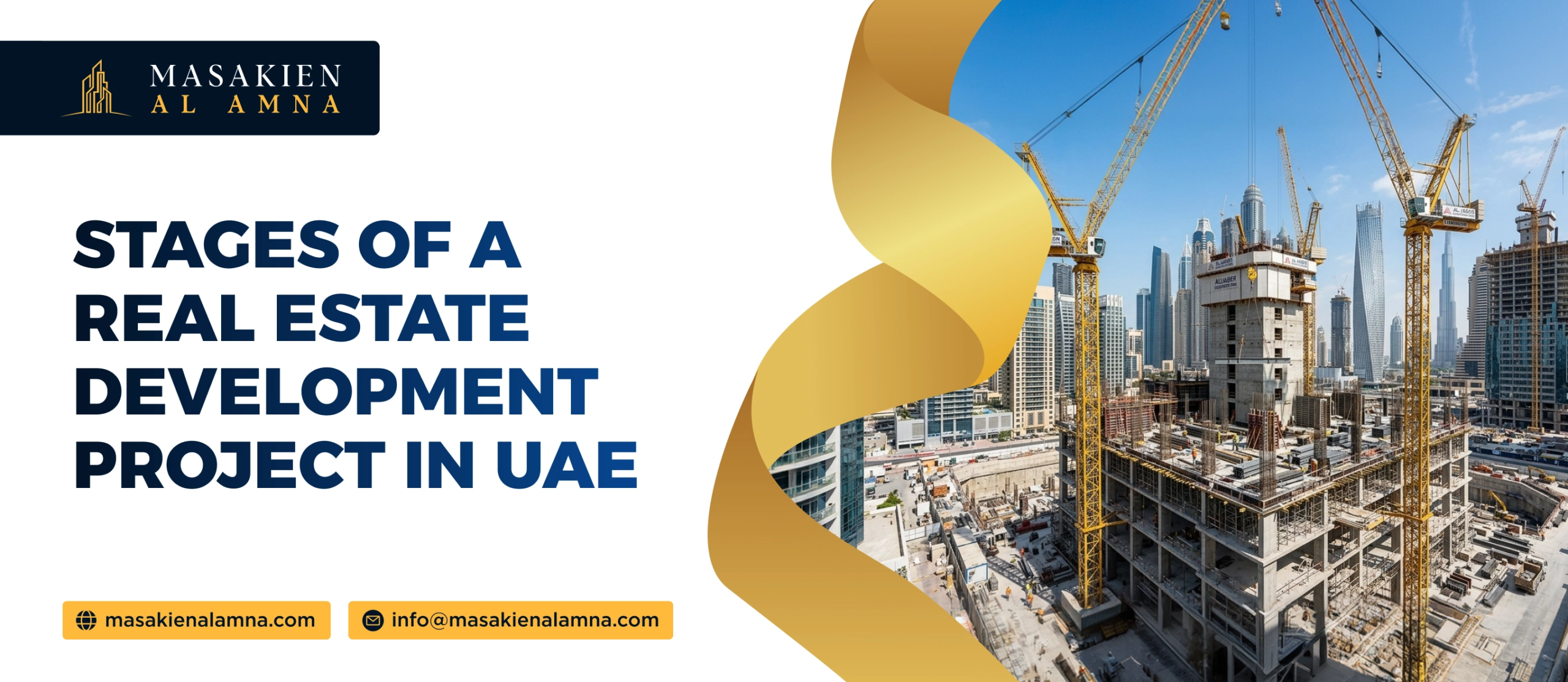
The construction stage is where the project finally begins to take physical form. The developers select contractors together with engineers and project managers to direct all aspects of building operations. The construction process starts with site preparation work and foundation installation, followed by the construction of structural elements. The building work proceeds through three stages, which include the installation of electrical systems and plumbing systems, and the finishing of interior spaces.
The stage requires strict adherence to both quality control measures and safety standards. The developers have to guarantee that all construction activities match the authorized building designs and engineering standards. Modern construction methods are typically used for major construction projects, which take place in urban areas of Abu Dhabi and Dubai. The project will meet its deadlines and budget requirements through the effective management of all project activities.
7. Marketing and Sales
The developers start their marketing efforts for the project to potential buyers and investors during the construction phase. The marketing plan for the project includes three main elements, which are digital advertising, real estate exhibitions, and partnerships with property brokers. The project generates pre-completion interest through its attractive promotional campaigns, which draw potential customers to its upcoming launch. The developers achieve their marketing objectives through early-stage marketing activities, which result in fast buyer acquisition.
The current stage focuses on promoting off-plan property sales. Buyers show interest in properties that offer them payment flexibility and pricing that falls below the market value of finished buildings. The developers use model apartments and virtual tours to demonstrate the final project to prospective buyers. The development will achieve greater success through extensive marketing activities.
8. Project Completion and Handover
The developer transfers ownership of the property units to buyers or tenants after obtaining official approval. The owners receive property documents and keys, which give them the right to use or lease the property. Property management services are offered by some developers who handle the ongoing maintenance of the building. The process of proper handover facilitates an effective shift from construction work to the period of building use.
Conclusion
The process of real estate development in the United Arab Emirates follows a system that requires precise management throughout all stages of development. The project progresses through its various phases, which include market research up to the point of property handover, because they hold essential importance for achieving project success. Contact us as the development cycle requires developers to manage three aspects, which include financial planning, legal compliance, and construction quality. The property development process consists of multiple stages that assess the property against market demand and regulatory requirements.
For investors and buyers, understanding these stages provides greater confidence when participating in real estate projects. The process helps them understand how simple project ideas develop into complete community projects. The development of Dubai and Abu Dhabi requires proper planning to support ongoing city expansion. The structured stages of the process create sustainable growth, which increases the value of the UAE real estate market.