
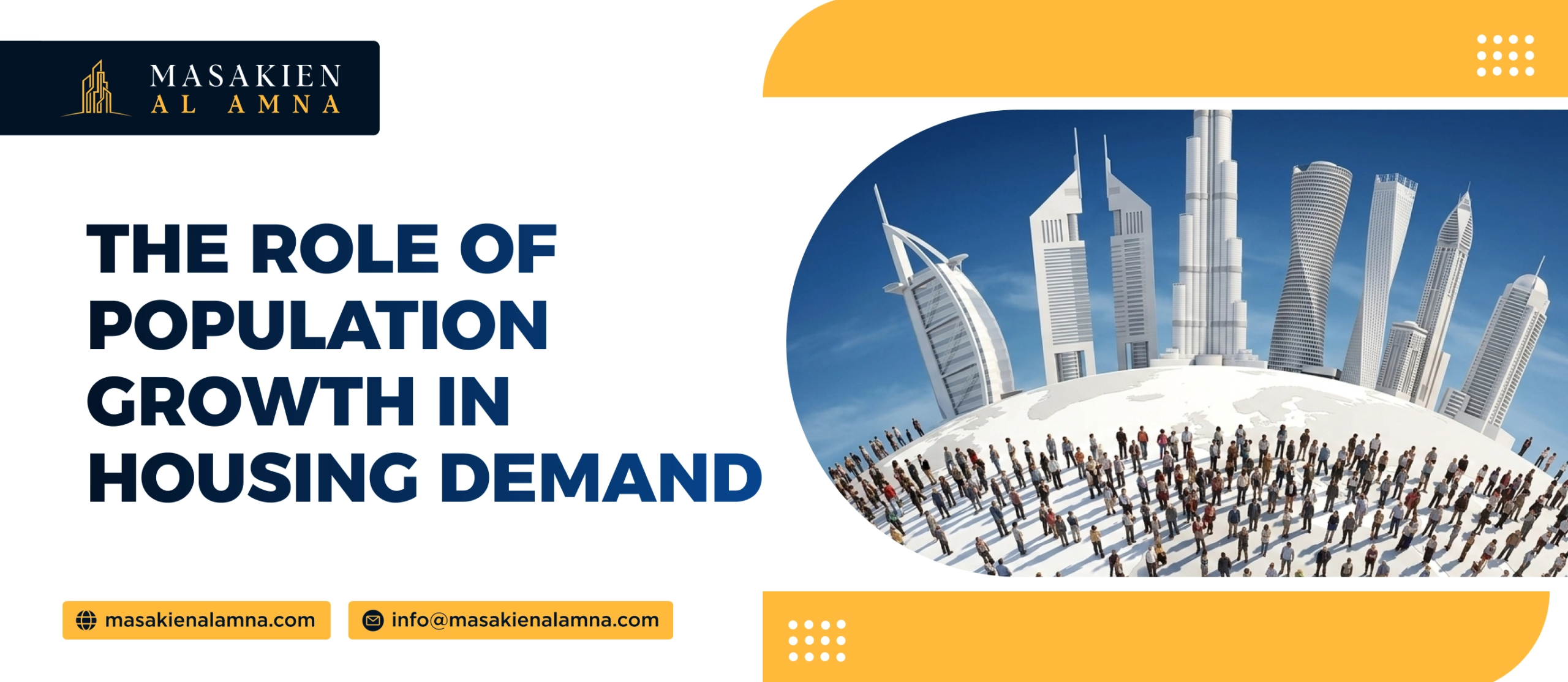
The demand for housing in a specific area depends primarily on the population growth rate of that area. The increasing population of a city or country leads to higher requirements for housing options, which include homes, apartments, and residential communities. Urban planners, real estate developers, and government officials need to study population patterns because this information helps them determine the housing requirements for all residents.
The combination of population growth with insufficient housing development causes multiple issues, which include housing shortages, increased property prices, and overcrowded urban areas. The process of creating residential areas through proper planning brings economic benefits, which lead to better living conditions for people. The sustainable development of urban areas requires an understanding of how population growth affects housing needs in those regions.
Increasing Urbanization and Housing Needs
Population growth causes people to migrate from rural areas to urban centers because they search for employment, educational opportunities, and improved living conditions. The urban housing market experiences major growth because more people choose to live in cities. The growing urban population requires cities to build additional housing facilities, which will support their expanding needs.
Urban areas need to create new residential neighborhoods that include houses and apartment buildings and tall structures to accommodate their expanding populations. Real estate developers concentrate on building housing solutions that can house many residents within compact areas. Cities that experience rapid population growth worldwide follow this particular pattern.
When population numbers rise quickly in urban areas, new housing development cannot keep pace with this growth. The result will include increased rental costs, high property values, and the growth of informal housing areas, which include overcrowded residential spaces.
Rising Demand for Affordable Housing
The rising population creates a greater need for affordable housing solutions. The growing number of families, together with the increasing independence of young adults, results in a strong demand for affordable housing. Through its provision of affordable housing, the program enables people from various income levels to access secure and pleasant housing options.
Population growth in multiple countries has led to a situation in which housing demand exceeds available housing supply. The limited availability of affordable housing options creates difficulties for middle- and lower-income families seeking appropriate housing. People who experience this situation face increased financial pressures, which lead to decreased life quality.
The authorities responsible for housing development have started to give their full attention to creating affordable housing initiatives. The organization needs to create housing solutions through its financial support for housing developments, together with its public-private partnership work and its subsidy system, to address the housing demand that arises from population growth.
Growth of the Real Estate Market
The growth of real estate markets results from population increases. The need for housing drives real estate developers to create new residential areas and mixed-use projects. This situation provides development possibilities for investors and builders, along with construction companies.
The housing market establishes property prices and rental rates through its demand for residential properties. Rapid population growth areas experience price increases because more people compete for the limited housing supply. The real estate sector becomes a crucial investment area for developing urban centers and expanding regions.
Population growth leads to advancements in housing design and construction methods. To meet the demands of today’s expanding populations, developers will create intelligent residences, eco-friendly neighborhoods, and compact residential areas.
The Growth of Suburban Areas and Satellite Cities
Central urban areas lose their capacity to accommodate people when city populations grow because this situation creates high demand for central urban areas. People start to shift toward suburban regions and adjacent satellite cities as a solution to this urban population issue. This trend spreads housing demand beyond the main city and leads to the development of new residential zones.
Suburban areas become more attractive to residents because their development creates new housing options, which decreases the demand pressure on urban city centers. Suburban areas appeal to families because they offer larger homes, peaceful neighborhoods, and superior residential conditions.
The expansion of suburban areas receives support from governments and developers who construct transportation systems and educational institutions, medical facilities and business establishments throughout these regions. These developments create appealing suburban areas, which people choose to reside in while they help maintain balanced population patterns.
Expansion of Suburban and Satellite Cities
Central urban areas experience overcrowding and rising costs when city populations increase. People start to migrate toward suburban regions and neighboring satellite cities as a solution to this issue. The main city area experiences higher residential demand because people start moving to outside areas, and new residential areas emerge.
Suburban expansion creates new housing alternatives, which help alleviate congestion in city centers. Suburbs become the preferred choice for many families because they offer bigger houses, peaceful streets, and superior residential conditions.
Suburban expansion receives backing from governments and developers because it establishes transportation systems, plus educational institutions, medical facilities, and business districts. Suburban areas generate residential appeal through their developments, which enable balanced population growth and employment opportunities. Check out our latest blog post on How Artificial Intelligence Is Changing Real Estate in UAE
Infrastructure Development and Housing Supply
Population growth creates a greater need for housing, which demands extensive infrastructure development. Housing projects require support from road networks, public transportation systems, electricity distribution systems, water delivery systems, educational institutions, and medical facilities. All housing communities require proper infrastructure to function normally, even when they have high-quality construction.
Urban planners need to synchronize their housing plans with their infrastructure development plans. The system enables service delivery to growing populations, which creates ideal living conditions. The system enables proper planning to eliminate issues that lead to traffic jams, school overcrowding, and public service overload. Infrastructure investment also increases the attractiveness of residential areas. People move to areas with good transportation links and nearby amenities, which leads to higher housing demand and more real estate projects.
Required sustainable housing practices need to be implemented because the world faces continuous population growth. The urban housing development process requires cities to establish environmental protection measures, which will prevent future urban development issues. Sustainable housing development includes energy-efficient structures combined with ecological areas and sustainable land management practices. Sustainable housing development increases permanent urban residential quality. Cities achieve better living conditions for their citizens when they achieve population expansion through environmental conservation and resource management.
Conclusion
Population growth creates significant impacts that determine worldwide housing requirements. Cities need to build additional residential units and enhance their infrastructure while establishing balanced neighborhoods because of the increasing population. Effective housing strategies enable cities to avoid housing shortages while controlling real estate market trends and driving economic advancement.
The housing supply needs to match the population growth rate, which requires cooperation between government agencies, developers, and urban planners. Contact us as cities can fulfill the housing requirements of their expanding populations by establishing affordable housing options, designing suburban areas, and implementing environmentally responsible building practices.
The connection between population growth and housing demand will provide solutions that develop better urban spaces and improve the quality of life for future generations.