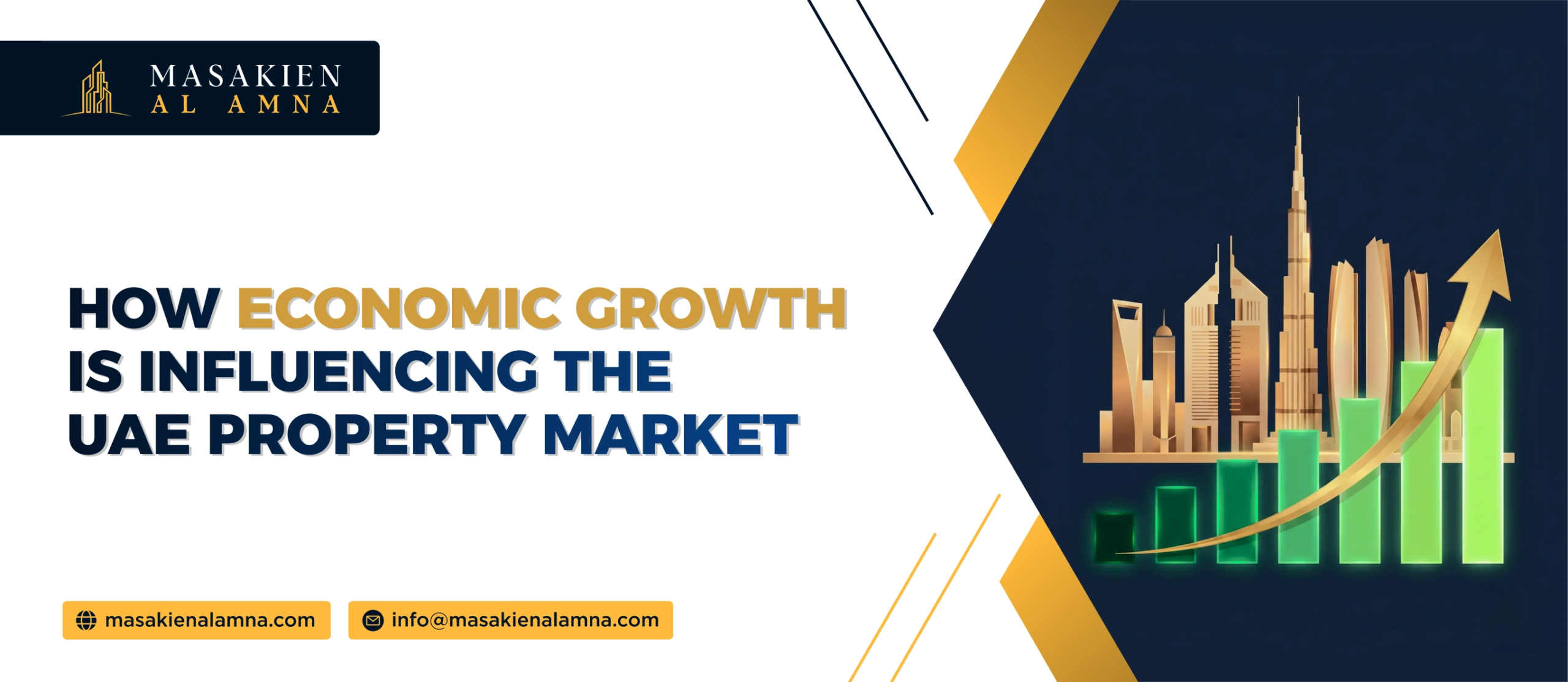
The economic growth of the UAE has played a vital part in the change of the real estate market. The property market has become a leading part of the economy with oil diversification, greater foreign investment, and large infrastructure projects, and the government has introduced powerful reforms. The blog looks at how economic growth is one of the major causes of the changes in demand, prices, investment trends, and development patterns in the UAE property market.
-
Economic Expansion Is Increasing the Demand for Real Estate
Real estate demands all through the economy have to be stronger, since the growth in the economy causes the inflow of new workers, the increase in the activity of the businesses, and the rise in the purchasing power, which are all directly related to the demand for real estate. The companies opening up in the UAE will not only bring in new professionals and executives, but they will also require housing and office spaces for the skilled workers.
The relocation of more people coming from overseas for work and conducting business is going to make the demand for both residential and commercial properties steady. Thus, this continuous demand inflates property prices and results in the launching of new projects. In addition, as the income level goes up, the market is thereby getting stronger as first-time buyers are switching from renting to owning homes.
-
Job Creation and Business Growth Are Fueling Housing Needs
The UAE’s economic growth has also been a reason for job cuts in the oil industry. The whole country will not be able to meet the demand for job seekers, and where would they turn to? The people are migrating to cities such as Dubai, Abu Dhabi, and Sharjah in the hope of finding new and better jobs.
This migration of workers in great numbers is what causes the need for various types of housing, such as rentals, family houses, and shared houses. Moreover, employers, too, are interested in being located in business hubs, thus pushing up the demand for property in the central and well-connected areas. This leads to high occupancy rates and good rental returns for property owners.
-
Government Economic Policies Are Strengthening Property Investment
The government’s pro-growth policies have raised investor confidence in the UAE real estate market to a great extent. The aforementioned policies, like long-term residency visas, Golden Visas, and foreign ownership laws that are friendly to investors, have lured foreigners to invest in properties even more.
The economic reforms that allow 100% foreign ownership in many sectors have been a great incentive for the business owners to settle in the UAE for the long term. Over time, this has led to more buyers or investors opting for the purchase option rather than renting, thus increasing the demand for the residential and mixed-use developments in the main emirates.
-
Population Growth Is Driving Residential Development
The economic growth always attracts foreigners, entrepreneurs, and skilled professionals from all corners of the world. The increasing population raises the demand for various types of housing options—from low-cost flats to extravagant houses and gated communities.
The developers are already responding by kicking off projects that are targeting various income brackets and lifestyles. This kind of balanced development not only allows the mid-priced segment but also the premium segment to grow together in an active and competitive property market.
-
Commercial Real Estate Is Expanding Alongside the Economy
As the demand for commercial real estate rises in the UAE. The economic activity depends on the office, co-working, warehouse, and logistics facilities.
Mainly, free zones and business districts are benefiting from this growth as the companies are looking for advanced infrastructure and modern offices. Hence, this growth gives a push to rental values and attracts developers to invest in top-notch commercial projects up to international standards.
-
Infrastructure Development Is Boosting Property Value.
The ongoing economic development of the UAE allows the government to make gigantic investments in infrastructure, comprising roads, metro lines, airports, ports, and smart cities. One of the main advantages of improved connectivity is the transformation of new areas into attractive, accessible ones by both investors and residents.
Nearby transport links and infrastructure projects often lead to an increase in property values. This also results in fewer tedious trips and more quality living. Hence, it encourages the settlement of people long-term, and this whole process positively affects both residential and commercial property demand.
-
The Short-Term and Luxury Properties Supported by Tourism Growth.
Tourism is a key component of the economy in the UAE, and an increase in this industry is immediately mirrored in the real estate market. The increased number of tourists is the main reason for higher demand in hotels, serviced apartments, holiday homes, and luxury residences.
The upward movement in the economy supports the tourism sector in terms of infrastructure, events, and visibility in the global market,, thus making short-term lettings a profitable venture. Landlords gain advantages from high occupancy rates, especially when their properties are located in prime areas like beaches, landmarks, and business districts.
-
Foreign investment in the UAE has bolstered a very stable market.
A strong and growing economy attracts foreign investors who are in search of safe markets with high returns. Political stability, transparent regulations, and investor-friendly policies have made the UAE a preferred location for investing in real estate.
The capital inflow from foreign countries boosts liquidity in the real estate market and helps keep the prices steady in the long run. Besides, demand diversification made by foreign buyers is another factor that significantly reduces the dependency of the market on local investors, thereby enhancing the resilience of the sector. Check out our latest blog post on How AI, PropTech, and Big Data Are Transforming UAE Real Estate
-
Rising Income Levels Are Shaping Buyer Preferences
Economic growth and higher income levels have a direct impact on the expectations of buyers. The new residents want to have a better lifestyle with modern, spacious, smart homes and green buildings.
The developers’ response to this has changed; instead of focusing on the number of units, they now pay more attention to the quality. Green building, effective energy use, and community living are some of the developments that are now standard in UAE properties, thus increasing the overall value and attractiveness.
-
Long-Term Economic Vision Guarantees the Real Estate Market Growth that Lasts
The UAE is planning to achieve its long-term economic goals with the help of Vision 2030 and Vision 2050, which are the major steps taken towards sustainable development and economic resilience. These real estate plans are, so to speak, not about short-term speculation but more about steady, non-vibrant growth.
The property of the UAE is going to be aligned with the economic vision through the development of infrastructure, planning of the population’s needs, and balancing of the real estate and economic sectors. Thus, the UAE is preparing a future-ready real estate market that is livable even in times of global economic uncertainties.
Conclusion
UAE property market success could only be attributed to economic growth, which was the main supporting factor. Every point of economic progress has an impact on real estate markets and values, ranging from job creation and population to infrastructure and foreign investments. Contact us as the UAE, with strong government backing and visionary clientele, continues to be the country where sustainable and profitable opportunities attract investors, businesses, and residents alike.