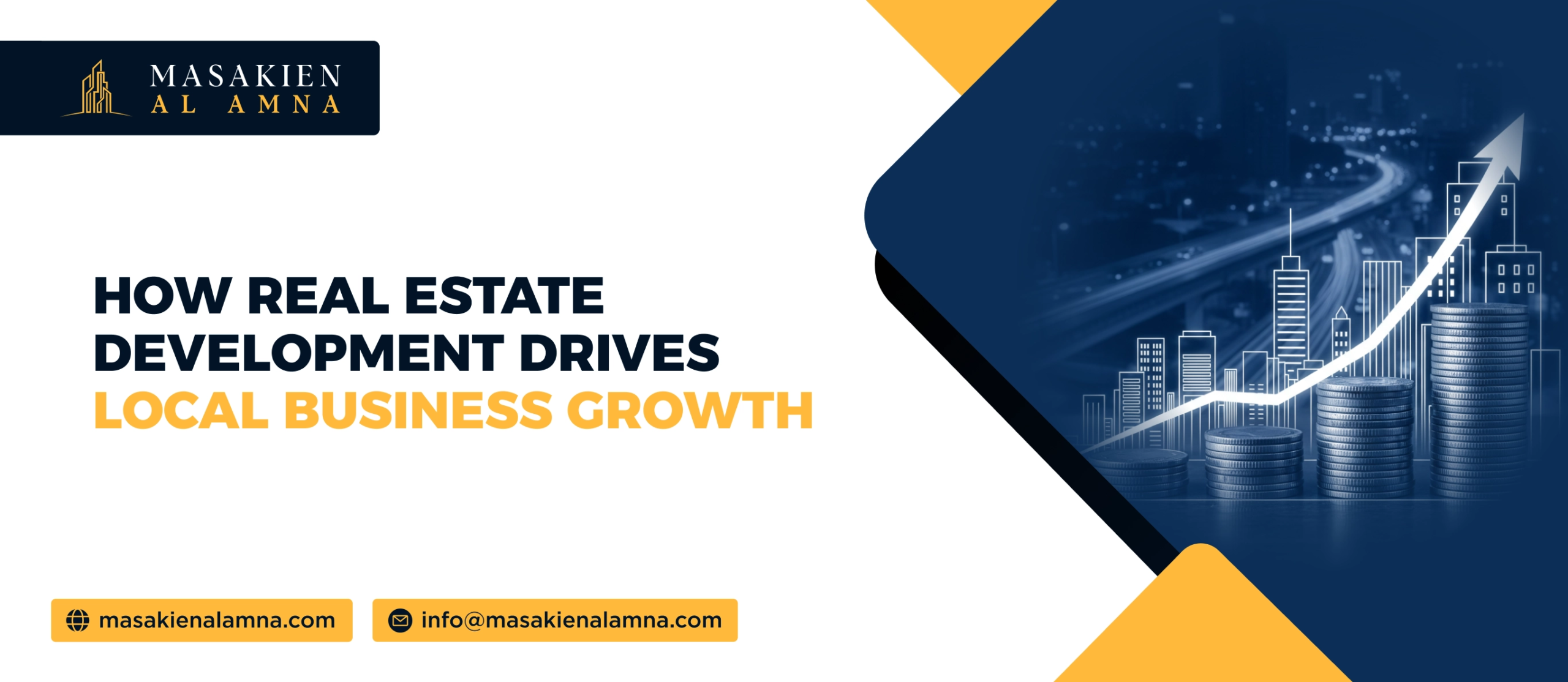
Real estate development is not simply about constructing residential units, office spaces, or retail outlets. It is a very influential process that determines the growth of cities, the expansion of economies, and the well-being of communities. Every new real estate development project, regardless of its type —residential, commercial, or mixed-use —then has the power to provide life and opportunities in the locality.
The coming of new buildings entails the creation of jobs, people coming in, and the need for services going up. The real estate development then forms the spine of the local business growth, which in the end creates a positive ripple effect that embraces all, from small shopkeepers to large corporations.
-
Boosting Employment Opportunities
One of the most direct and noticeable effects of real estate development is the creation of jobs. It starts with the excavation of the site and creates thousands of job opportunities. For the duration of the construction, there will be a continuous demand for all the trades involved in the project, such as construction workers, engineers, architects, electricians, and interior designers.
The families of these people will be supported by this direct employment, and the local economy will also benefit from their spending. However, the impact does not end there. Real estate development also leads to indirect job opportunities. The workers who are directly involved in the project use their income to cover basic needs such as food, transport, and shopping; in other words, they spend locally.
The whole cycle of spending continues by supporting local distributors, restaurant owners, and service providers. More people will always be there for managing the property, providing security, maintenance, and cleaning, as well as running retail businesses inside the building, even after the project is done. Thus, the cycle is continuous and forms long-lasting employment stability while at the same time allowing small businesses operating in the vicinity to prosper.
-
Increasing Demand for Local Services and Products
The development of new buildings and communities invariably leads to an increase in the population of the area. The demand for everyday products and services becomes a major issue with population growth. The needs of the residents, which include groceries, healthcare, salons, restaurants, fitness centers, and schools, will open up avenues for the establishment of SMEs, or small and medium-sized enterprises.
Likewise, the commercial developments, such as office spaces, attract workers who, in turn, also spend money at the local markets. They might take their lunch at the nearby cafes, buy their office supplies from the local stores, or use the local transportation.
This, in the long run, will lead to the opening of more businesses by the entrepreneurs due to the steady demand that has been created, thus giving a push to local economic growth. This is the scenario of an area that was once known for its open land but has transformed into a buzzing commercial zone having all the prospects.
-
Encouraging Infrastructure and Transportation Growth
Real estate development is mostly the major factor responsible for triggering better infrastructure and connectivity. When large projects are planned by developers, they usually partner with the local authorities to upgrade roads, drainage systems, and public transportation and install street lighting. These improvements not only accommodate the new occupants but also the entire society.
Enhanced roads and transport systems will definitely make it easy for people to get to work, schools, and markets. With this improved accessibility, there will be an influx of even more residents and businesses, resulting in a loop of economic activity. For instance, a housing complex that has good connectivity with a metro station or highway will be able to attract new restaurants, retail stores, and service centers.
-
Attracting Investment and New Businesses
A region with advanced infrastructure and well-planned real estate developments has investors coming in automatically. Along with their counterparts, business owners from all over the world are perpetually seeking to buy or rent space for their offices, warehouses, and retail outlets in such areas. Retail spaces like a new shopping mall or a business park can happen to be a huge draw for not only brands but also startups and franchisees.
This investment not only strengthens the local economy but also serves to create a competitive environment where new ideas and quality of service are the things that matter. The entry of new businesses will mean that the local population will have better job opportunities, along with better access to facilities and a wider variety of services. Eventually, this cycle of investment fortifies the economic base of the locale, thus attracting more developers and entrepreneurs every now and then.
-
Enhancing Community Spaces and Lifestyle
Future real estate development and renovation are all about people-oriented projects, not just buildings. The present-day developers are putting their creativity into the projects that comprise parks, shopping malls, and complexes, and also include the living spaces and entertainment centers. These places are becoming the social and commercial centers of the city where people are drawn to, where they meet, and where they spend their money in the local economy.
The people in a well-planned community are quite certain that they will have a beautiful place to live and thus are more inclined to put their money into local facilities—from gyms and schools to healthcare and entertainment. This lifestyle improvement will also raise the area’s status, thus bringing in even more residents and businesses. Local entrepreneurs will then have a growing population with diverse needs to serve, which will lead to a gradual yet steady growth of their businesses.
-
Driving Tourism and Short-Term Rentals
Tourism has turned out to be another sector where real estate development has had a major impact. Through the investments made by cities in hotels, resorts, serviced apartments, and cultural attractions, both local and international tourists are lured. The accommodation, food, shopping, and local exploration are the main areas where the tourists’ budget goes, all of which directly support the local businesses.
Short-term rentals like Airbnb and summer houses have also opened up new income streams in recent times. The owners of the property can let their places to tourists, earning more in terms of rent and getting the visitors to experience the local culture. The restaurants, souvenir stores, transport services, and tour guides are among the beneficiaries of the booming real estate related to tourism. In other words, development and tourism are interlinked and thus contribute to the uninterrupted flow of business growth and local prosperity.
-
Strengthening Small and Medium Enterprises (SMEs)
Small and Medium-sized Enterprises (SMEs) are those businesses that, although considerable in number and variety, are to some extent not a major factor in a local economy but are still the major contributors in terms of employment. Development of the real estate sector, on the other hand, allows and encourages SMEs to get the much-needed boost in growth. In the case of new housing or new offices, the small businesses in the neighborhood benefit more since there is an already existing market. Small businesses, such as a local baker, a stationery store, a cleaning service, and cafés, are some of the many that find new opportunities to provide their services to the new communities.
Moreover, during the process of building, the developers usually engage with the local contractors, suppliers, and artisans. This association not only helps the small businesses to become known to a bigger audience but also increases their profits and gives them the chance to gain experience from professional projects. Through partnering in various forms, SMEs gradually become stronger, create more employment opportunities, and significantly contribute to the economic development of the region.
-
Increasing Property Value and Wealth Distribution
Development always brings along with it a rise in prices of nearby properties. The increase in property values is a boon for the local landowners and house owners who will be in a better position financially. Increased property values translate into more local consumption since the feeling of being in a better financial position encourages the residents to invest in home improvements, education, and lifestyle upgrades.
In addition, with the development of areas, local authorities get to collect more property taxes, which they can then allocate for the betterment of public services such as schools, clinics, and parks. This process of wealth redistribution makes it clear that development is for the investors and not for the whole community. It is a win-win situation whereby the residents as well as the local businesses reap long-term financial and social gains. Check out our latest blog post on The Role of Customer Experience in Growing a Real Estate Business
-
Building a Sustainable Local Economy
Real estate development is a big factor in the creation of a fair and ecological economy. The well-thought-out development—mixed-use projects that combine residential, commercial, and recreational spaces, for instance—guarantees that the community is lively all the time. It is a win-win for businesses, employees, and local retailers.
Moreover, sustainability refers to the use of energy-efficient buildings, the development of green areas, and the utilization of eco-friendly materials. These elements greatly minimize the company’s ecological footprint as well as supply the conscious end-users with a place to come to. When people feel a connection with sustainable projects, they are more likely to invest for the long term, which will keep the flow of money going in the local economy.
-
Long-Term Economic Stability
The outcome of real estate development is not a short-term one but rather a long-term growing ground. The more the community grows, the more new businesses come, and the more the local government collects in taxes, licensing, and services. The government then uses this revenue to fund public works like schools, hospitals, parks, and infrastructure upgrades.
The continuous cycle of investment and enhancement makes sure that the local economy gets through even the tough times. On the other hand, active real estate development areas are also marked by higher investor confidence and lower unemployment rates. Eventually, this leads to continuous prosperity, which makes the city or town a good place to live, work, and do business.
Conclusion
Real estate development acts as a major local business growth driver. Every project, regardless of the scale, opens new avenues that are not limited to construction. It creates jobs, brings in money, and provides good living conditions for people. Better roads, stronger communities, and people discovering new things that make it worth their while to spend and invest locally are just some of the changes.
To put it simply, the growth of real estate signifies the overall flourishing of the local economy. A small family-owned store or a multinational corporation can be found on the list of beneficiaries of the development’s positive impact. Contact us as Urban development being a continuous process, planned and sustainable real estate development would always be the driving force at the core of this evolution—easing the way for communities to establish a future full of prosperity, stability, and vibrancy.