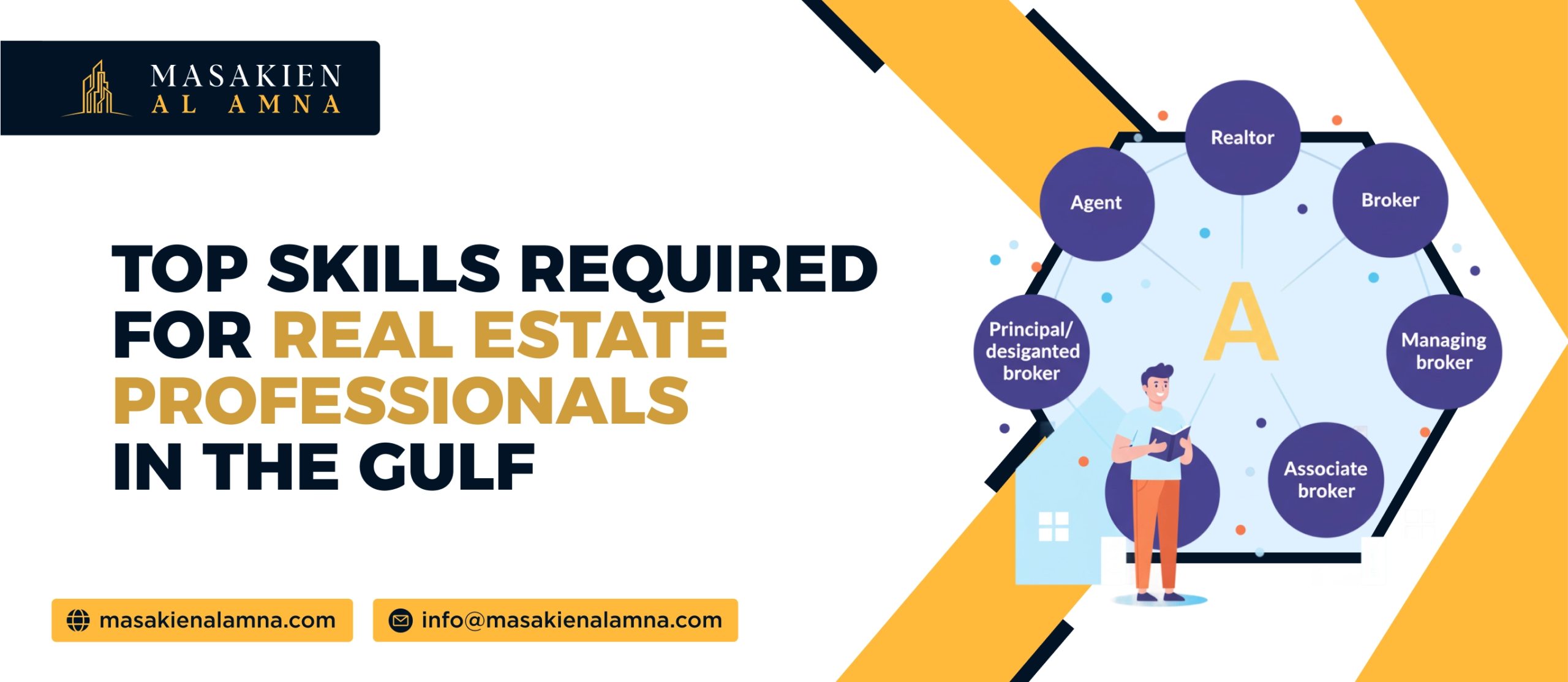
The Gulf area’s real estate market is experiencing a phenomenal growth rate. The investment, luxury accommodations, and huge commercial projects have turned the UAE, Saudi Arabia, and Qatar into international cities for real estate. The range of opportunities for real estate agents is huge, from the towering skyscrapers of Dubai to the most innovative developments in Riyadh.
Nonetheless, the quick-moving market presents the challenge of not merely selling or renting out properties as the quintessence of real estate success. It necessitates an ideal mix of skills—knowledge of the market, communication, negotiation, cultural awareness, and digital proficiency. The Gulf market is competitive, fast-changing, and relationship-based. Hence, the professionals must always be sharp, flexible, and competent in various fields.
Let’s take a look at the skills that surely every real estate professional will need to develop to successfully navigate the Gulf’s competitive and ever-changing property landscape.
Grasping the Gulf Real Estate Market
Before talking through the specific skills, it is necessary to comprehend what the Gulf’s real estate industry is like. The market is governed by laws and regulatory measures that are different from those in Western countries. For instance, the freehold properties are those where non-natives can buy properties, while leasehold properties are for locals or those who take on long-term leases only.
Western investors are lured by the government through various measures, such as a long-term residence permit for buyers of property, the flexible norms of ownership, and no tax in the majority of Gulf states. The likes of Saudi Vision 2030 and the uninterrupted expansion of Dubai, among other projects, are not only redefining the real estate landscape but also nurturing it to be a home for professionals and investors alike from anywhere in the globe. To be part of such a varied and competitive world, one has to possess a wide range of skills that are appropriate for the Gulf’s dynamic, varied, and tech-savvy real estate market.
-
Market Knowledge and Local Regulations
One can never overlook the market knowledge of the region in which he/she is operating. The market knowledge is always the first step to becoming an excellent real estate agent in the Gulf. Apart from knowledge of the localities, the realtors need to know about the laws related to land and so forth, as well as get updates from the local authorities with the help of RERA (Real Estate Regulatory Agency) in Dubai or similar bodies in other Gulf countries.
The proper knowledge of the various neighborhoods, properties, their prices, etc., makes the agents and consultants trustworthy when they advise clients. When the professional is aware of the area’s best rental yields or the latest investors’ attractive project, this type of information can significantly influence the conversation with the client.
Visa laws, developer offers, and market trends are to be real estate professionals’ continual study topics. This knowledge provides not only the confidence that the agent is to the client but also strengthens the agent’s position as a reliable expert in the eyes of the client.
-
Strong Communication and Interpersonal Skills
For those who operate in the Gulf real estate market, communication is the main factor of success. Communication involves working with clients from different countries, speaking different languages, and having diverse cultural backgrounds. So being able to put thoughts into words and listening, not just hearing what the client really needs, are the main points of the process.
Excellent interpersonal skills lead to clients coming back constantly and recommending the agent to others. In the Gulf, it is often the case that a deal is closed not only because of the property features but also because of the way the client feels about the agent. Bilingualism, particularly the knowledge of both English and Arabic, is definitely an asset. These people can easily reach out to both the international investors and the local clients, thus enhancing communication, which is more personal and less formal.
-
Negotiation and Persuasion Skills
Negotiation is one of the top-notch skills that the real estate sector appreciates the most. Every transaction comprises talking about the price, setting up the payment plans, commissions, and conditions. So, the professionals have to somehow learn convincing negotiation while being fair and professional at the same time. Check out our latest blog post on How to Check the Legitimacy of a Real Estate Project
The finest negotiators are those who can combine assertiveness with empathy. They get the buyer’s and seller’s points of view and strive for a win-win situation. Persuasion is equally significant. Yet, it’s not about forcing customers to decide—it’s about leading them through the property’s true worth and making them feel good about their selection. Moreover, emotional intelligence is another skill that is imperative for interpreting the client’s actions and replying appropriately during negotiations.
-
Marketing and Digital Branding Skills
In the digital age we live in, marketing has become the bloodline of the real estate industry. A real estate agent must be skilled in promoting the properties, hiring the best photographers/illustrators to create an attractive display of the properties, and also being very active in social networks to develop a good online personal brand.
The Gulf’s property websites, such as Property Finder, Bayut, and Dubizzle, are the most frequently used, and if someone can use these websites and tools smartly, he/she can close the deal with the quality leads that one gets. Apart from these websites, social media sites like Instagram, LinkedIn, and Facebook are also effective in getting to a wider audience.
Video tours, client testimonials, and success stories are some of the small yet impactful methods to establish trust. Furthermore, professional people with elementary digital marketing knowledge, such as SEO, paid ads, and analytics, will be able to measure which way of attracting and converting leads is the best for them and will thus attract high-quality leads consistently.
-
Networking and Relationship Management
The Gulf’s real estate market is mainly driven by relationships. Skilled networker professionals will naturally gain access to silent listings, investor groups, and collaborations.
Participation in real estate shows, community events, and networking can result in valuable relationships with builders, agents, and officers. Management of relationships should not cease once the deal is accomplished, but rather continue through follow-ups, holiday greetings, and updates.
CRM software can enable agents to organize client touches, likes, and no-contact times easily. The establishment of a strong network guarantees that professionals are always one step ahead in reaping new opportunities.
-
Financial and Investment Literacy
The Gulf clients are mostly aspirants of long-term or capital growth investors. This implies that the real estate industry practitioners have to be well-versed in financial terminologies like ROI, rental yield, and mortgage options. It is not only professional and confident but also client-centered when an agent explains payment plans, off-plan investment benefits, and financing structures from their standpoint.
Adeptness in taxes, transfer fees, and service charges also helps in managing client-side expectations. When the professionals are able to make the complex financial aspects comprehensible to their clients, this not only creates trust but also earns them the status of reliable investment advisors.
-
Cultural Sensitivity and Professional Ethics
The Gulf is a place where different cultures, traditions, and proper behaviors abound. It is very important to know and appreciate these cultural values if one wants to be successful. Very minor acts like giving a proper introduction to clients, wearing the right clothes, and arriving on time will all leave a very strong mark.
Cultural sensitivity also implies knowing the negotiation styles, the tone of communication, and the preferences of the clients. Take, for instance, a case where some clients would rather have a slower, more formal discussion, wanting to decide.
The ethics matter equally. The real estate laws in the Gulf are very clear, and the agents have to observe practices such as being clear about their dealings, not engaging in false advertising, and keeping the information secret. It is the honest dealings and the professionalism that one is committed to that will eventually lead to a long-lasting and sustainable career in the industry.
-
Adaptability and Continuous Learning
All the changes in laws, market conditions, and technology make the Gulf real estate market very fast-moving, and there are those who promptly adjust to these changes who outdo the rest.
Learning continuously—by taking online courses, participating in certification programs, or attending market workshops—is a must for career progression. A professional has to know all the new real estate trends, sustainability practices, and government projects about the property that will affect demand.
Being adaptable also implies being open to criticism, changing the way you communicate, and seeking new ways of helping the clients. The capacity to learn and grow is what distinguishes the best from the rest in this rapidly developing industry.
-
Technological Proficiency and PropTech Awareness
The introduction of new technologies is turning the Gulf’s real estate sector upside down. The market becomes more intelligent by the day through virtual property tours and AI-powered CRMs. The real estate professionals have to adapt to these technologies and make their ways of working more client-friendly and less operation-intensive.
To illustrate, the use of virtual reality (VR) is very handy in the case of marketing properties to international prospects who cannot come to see them in real life. Data analytics and AI tools not only help in understanding but also in anticipating the market fluctuations and future property values.
Real estate agents should be the first to know about the latest PropTech (Property Technology) trends to keep their edge. Those who will be able to combine human expertise and digital devices will never have problems getting clients and signing contracts quickly.
Conclusion
The Gulf real estate sector brings professionals unmatched opportunities to learn, grow, and adapt. The region’s property market ranges from the glittering towers of Dubai to the great developments of Saudi Arabia; so full of potential is the area. Contact us as still, success is not a one-time event. It is a continuous process that takes a mix of technical know-how, good communication, ethical standards, and a strong desire to keep growing.
Once the real estate professionals acquire the skills: understanding the market, negotiating, digital marketing, cultural awareness, and adaptability, they will not only get the deals done but also make the most of a career in one of the most dynamic markets around the world. In the Gulf, where there are ambitions and opportunities, selling is not the end of the process; it is the beginning of trust, value delivery, and success stories that last for ages.